This summer, I am doing medical machine learning research as part of MISTI Germany. In my research project, I have been training and evaluating sparse autoencoders (SAEs), a type of deep learning architecture model, to better understand how pathology foundation models interpret biological concepts in pathology slides. I am being hosted by the Institute for AI in Medicine (IKIM), a research institute at the University Hospital Essen. Essen is a regional city in North Rhine-Westphalia (NRW), a western state that borders Belgium and the Netherlands. Other major cities in NRW include Düsseldorf and Cologne.
My motivation for doing MISTI Germany this summer came from a desire to do research abroad and dive deeper into the growing field of ML for healthcare. After having a positive GTL Germany experience last year, I was inspired to do summer research in Germany. Although I could have done nothing but relax post-graduation, I wanted to develop stronger skills in ML and learn more about ML in the medical setting. I had prior exposure to computational pathology from my MEng thesis research project, which made this research project the right fit for me.
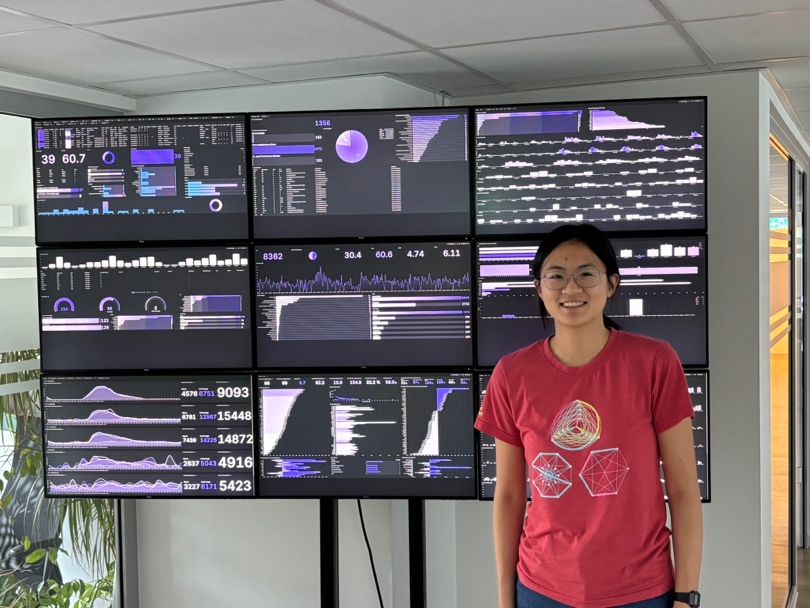
Although my research group did not directly work with patients, I appreciated that my research group worked on various medical technologies like imaging that helped doctors not only in the nearby hospital, but also in other parts of Germany. While my research experience at MIT focused primarily on fundamental and basic science in computational biology, my research in Germany centered more on engineering and direct applications, something that I found refreshing. Furthermore, being part of a large research group of 40 people has provided me the opportunity to learn more about the diverse applications of computer science in medicine and healthcare, such as virtual reality labs and radiology.
Another aspect I found interesting about my work environment was that the people in my group came from a diverse set of academic and professional backgrounds, from computer science to medicine, just to name a few. Some had experience as software engineers, while others were physicians and became interested in bioinformatics. This experience has taught me that people can pivot to healthcare from vastly different fields, even after graduation and later in their careers. Although the most traditional route in the healthcare sector is to study the life sciences, computer science and other areas of engineering are just as essential in healthcare, a field that greatly benefits from interdisciplinary work.
Outside of work, I got to know my research group better through daily conversations during lunch in the office kitchen. From these conversations, I not only got to learn more about German culture and history, but also news and politics. Something that stuck with me was that the people in my group were not only interested in current events affecting Germany and Europe, but also issues in the U.S. and the world.
Overall, doing research in Germany has made me think about the global aspect of healthcare innovation and research: despite coming from different backgrounds and nationalities, we were all united one mission – using computer science and machine learning to make advances in medical technologies not only for Germany, but also for Europe and the world.
Written by Vivian Hir ’25 MEng ’26, a recent graduate who majored in Course 6-7. She is doing machine learning research for digital pathology at the University of Medicine Essen in Germany this summer.

