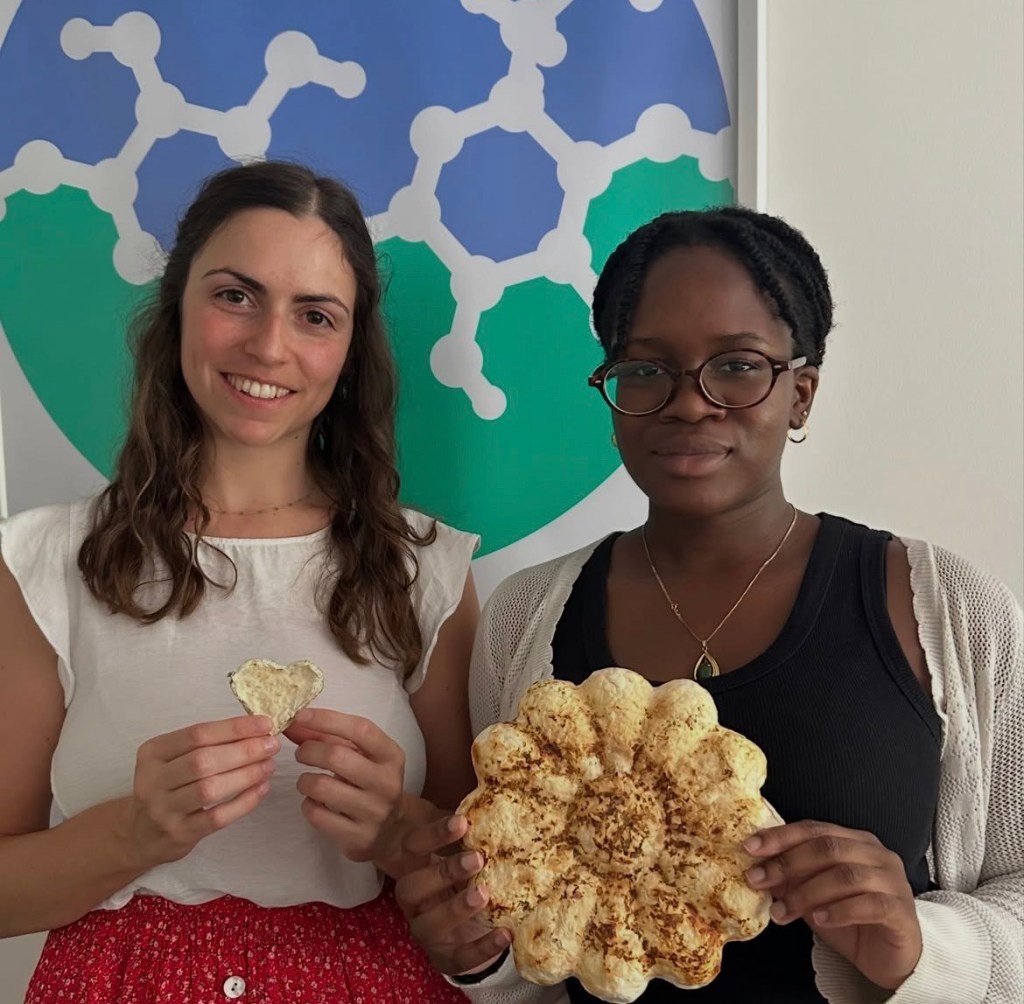
Cou Cou from Lausanne, Switzerland! I’m Demilade, a rising sophomore in Course 10 (that is ChemE for any non-MIT folks!), concentrating in Environment and Sustainability. I’m spending this summer exploring Switzerland, practicing my French, while doing research at the Sustainable Materials Laboratory in EPFL (École Polytechnique Fédérale de Lausanne or Swiss Federal Institute of Technology in Lausanne in English). My project is surrounding the development of sustainable alternatives to petroleum-based plastic food packaging and other materials, with mycelium-based composite materials. So far, the project has been a great experience to test around with different properties, and traits we desire in these materials, and playing around with different methods to achieve them, but enough about me.
The most important fact I’ve learnt in Switzerland so far, is that Swiss people LOVE to hike, I mean I totally understand, their country is gorgeous with over 200 mountain peaks, and the bluest lakes you could imagine in the Alps. So it’s unsurprising to say, the conservation and preservation of Switzerland’s natural landscapes is a very important conversation here, and a factor in the vote for a Swiss 10-million population cap referendum earlier this summer. Although the referendum did not pass, the conversation about preserving Switzerland still ensues, and I have been able to witness some of the impacts firsthand.
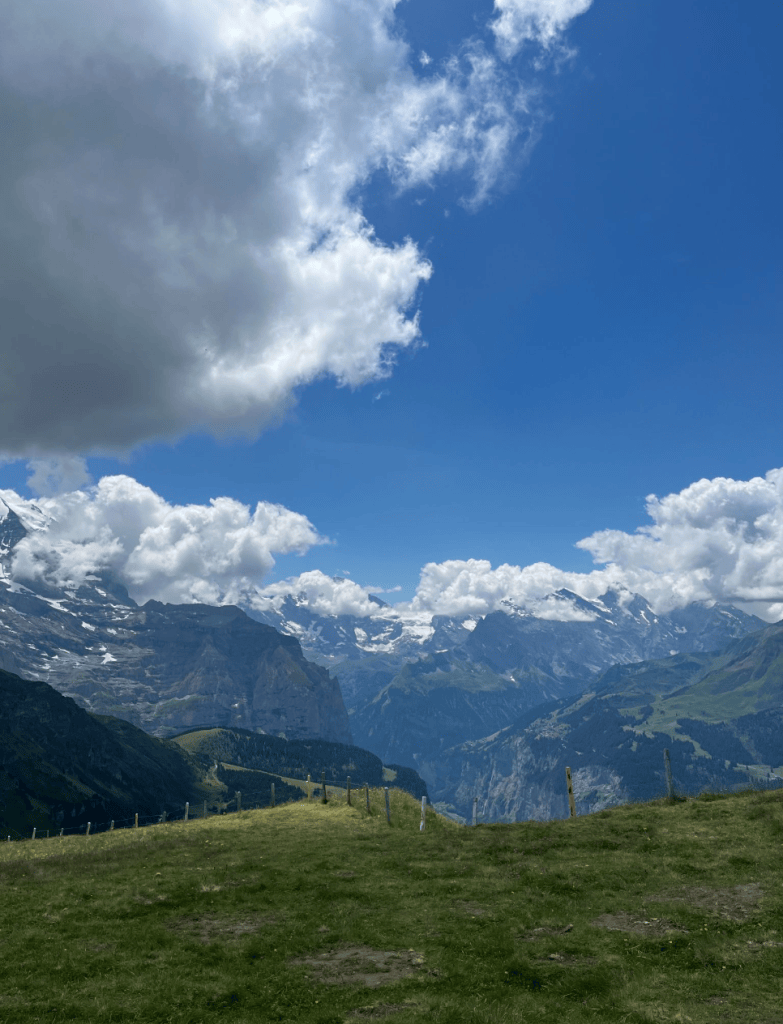
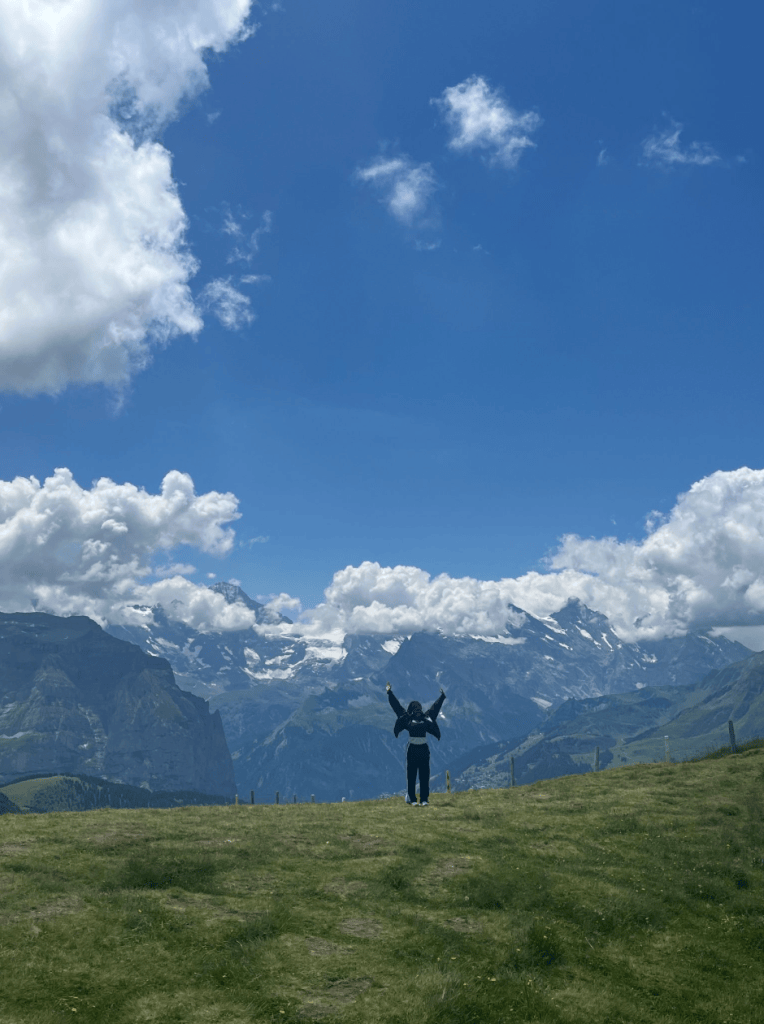
Mannlichen, Switzerland – Me Living out my Sound of Music Dreams!
In the first few weeks of my internship at EPFL, I was so unluckily found myself in the middle of La Canicule (Heatwave in French), across Western Europe, and Switzerland, some locations reached temperatures over 40℃, (about 104℉), unseasonably strange for the time of year and also the region. As someone who grew up between the heat valley of Southern California, and the tropical climate of Lagos, Nigeria, I thought I would survive easily in these temperatures, but the lack of air conditioning had other plans for me.
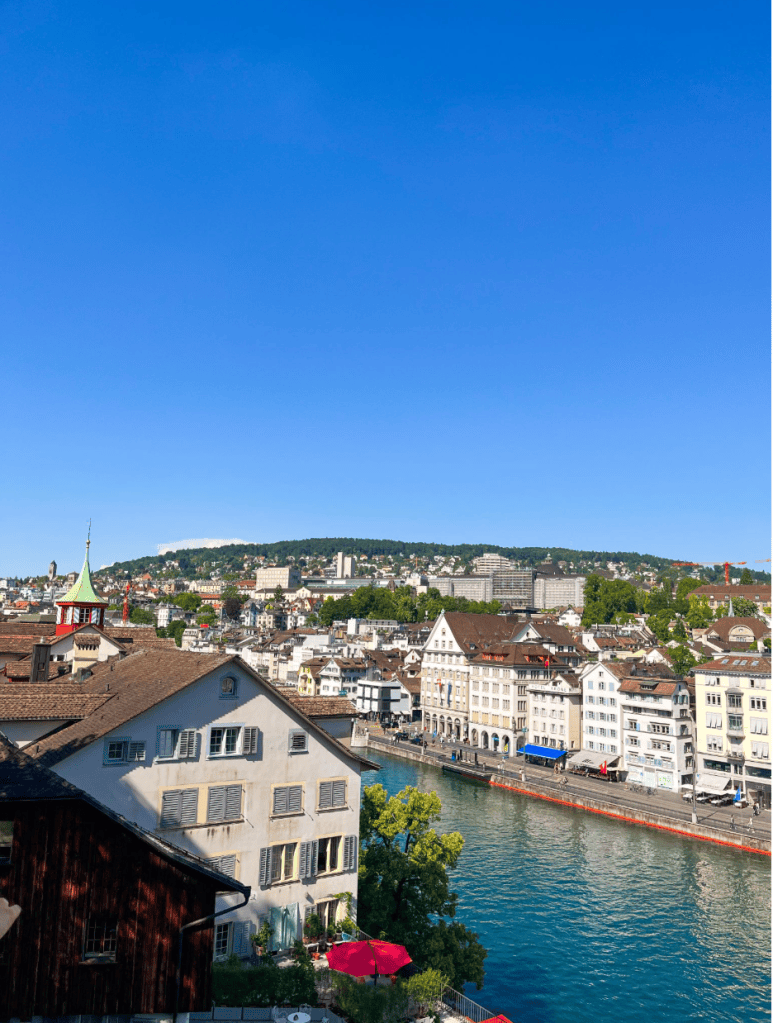
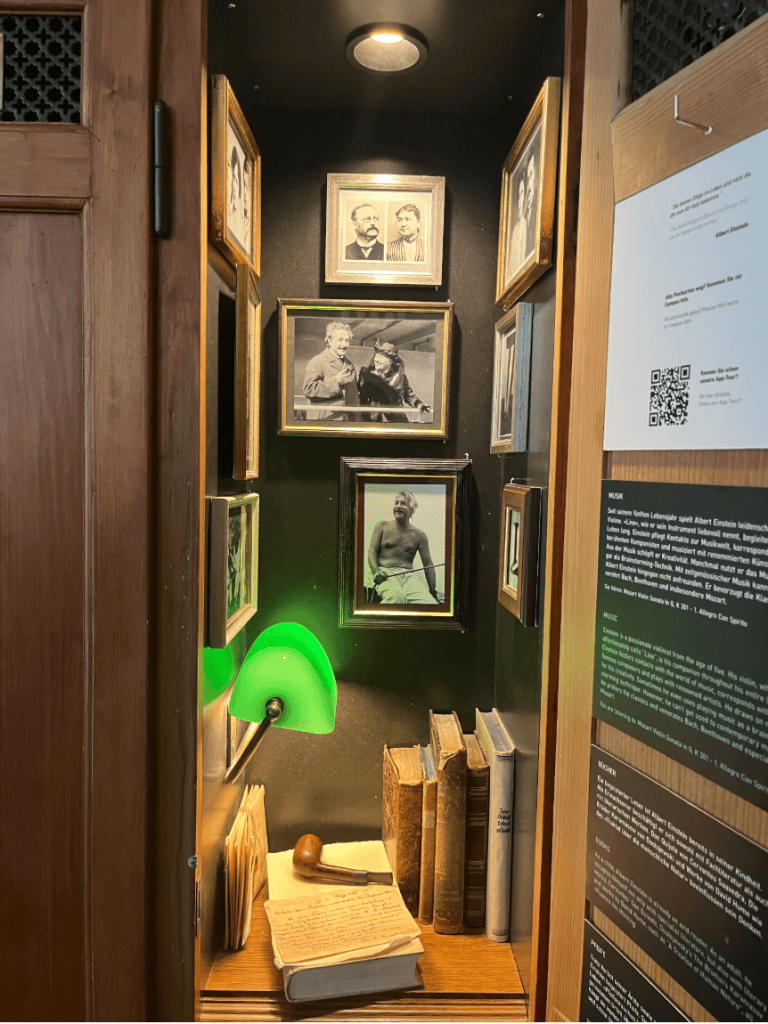
Zurich – One of the hottest days of the Summer, I took a day trip from Lausanne to Zurich (Got to visit ETH Zurich and saw Albert Einstein’s Locker!)
Over centuries, architecture and human adaptation had created buildings designed to keep heat in, and protect people from harsh winters, and cool temperatures mostly year-round. However, with the rise of climate change and global warming, the building design that was once created to protect, now puts the vulnerable in danger with the extreme heat. Also, with Switzerland being one of the fastest heating countries (2.2x the global average), this continues to put people at risk in the heat, but also the vital glaciers that are signature to the Alpine landscape and Swiss water reserves.
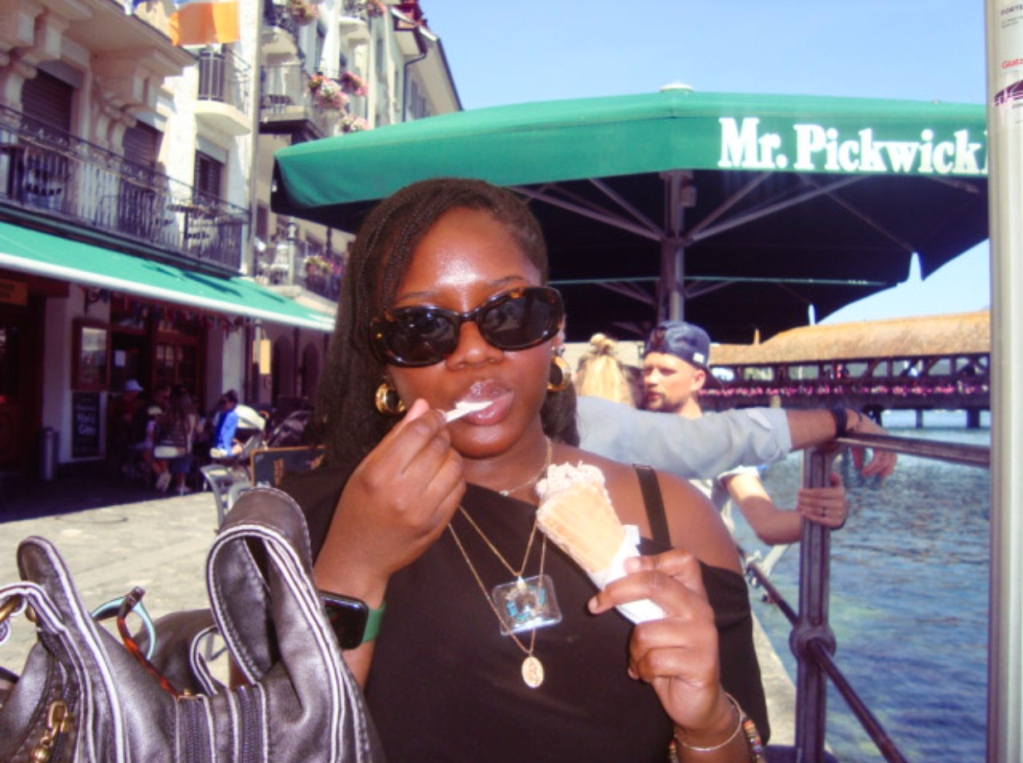
Nothing like some cold gelato to beat the Swiss heat – Luzern (Visited Luzern, a Swiss German city, known for its iconic medieval surviving structures as the medieval city walls and the Chapel Bridge)
However, learning and truly experiencing first hand the impact of climate change in Switzerland, pushed my own research even further. My focus was utilising the resilience of nature in combating the fight against climate change. In my lab, I’m working with my PI (Principal Investigator/Head of the Lab!), and my post-docorate supervisor, to create mycelium-based composite materials using food waste such as yam, plantain peelings, and spent coffee ground, to make alternative to single-use plastic packaging whose manufacturing required fossil fuels for energy and materials, impacting the world’s carbon footprint even further. I was also able to bring in my perspectives of utilising food waste that is common in a different part of the world, much of Sub-Saharan Africa. Through selecting yam and plantain as food waste for this project, we are able to expand the possibilities of these materials being manufactured across the world.
To me, the Sustainable Materials Laboratory is the epitome of something that was said to me in high school by a judge in a climate-focused challenge, that the environment itself is one of our most useful resources in the fight against climate change. Through researching possibilities of bio-based materials, the group focuses on many materials ranging from nano-cellulose which is a strong, fibrous material made of cellulose (the building blocks of plants!) to mycelium. They work toward reducing the reliance on fossil-fuel based plastics, and materials in a variety of industries such as packaging, construction and medical tools.
My project, specifically focusing on mycelium-based materials, involves a process of me choosing a specific substrate for the mycelium to grow on, and simultaneously bind to, create a tightly intertwined network of mycelium and substrate. To give a quick overview, mycelium is known as the vegetative part of fungi, essentially the ‘roots’ of mushroom sprouts. Mycelium and fungi come in hundreds of different species and families, but the mycelium and fungi we focus on come from more edible mushrooms, such as reishi mushrooms, and are known for their tendency to rot through wood.
Through the process of the mycelium growing whilst releasing enzymes to break down wood, or other organic substrates to simplify sugars for consumption, the mycelium binds tightly to the substrate. The growth process is stopped before the mycelium can break down and all of the substrate is consumed. During this growth process, I place the mycelium in a selected mould to recreate shapes and forms that can be used for packaging, and also decorative processes!
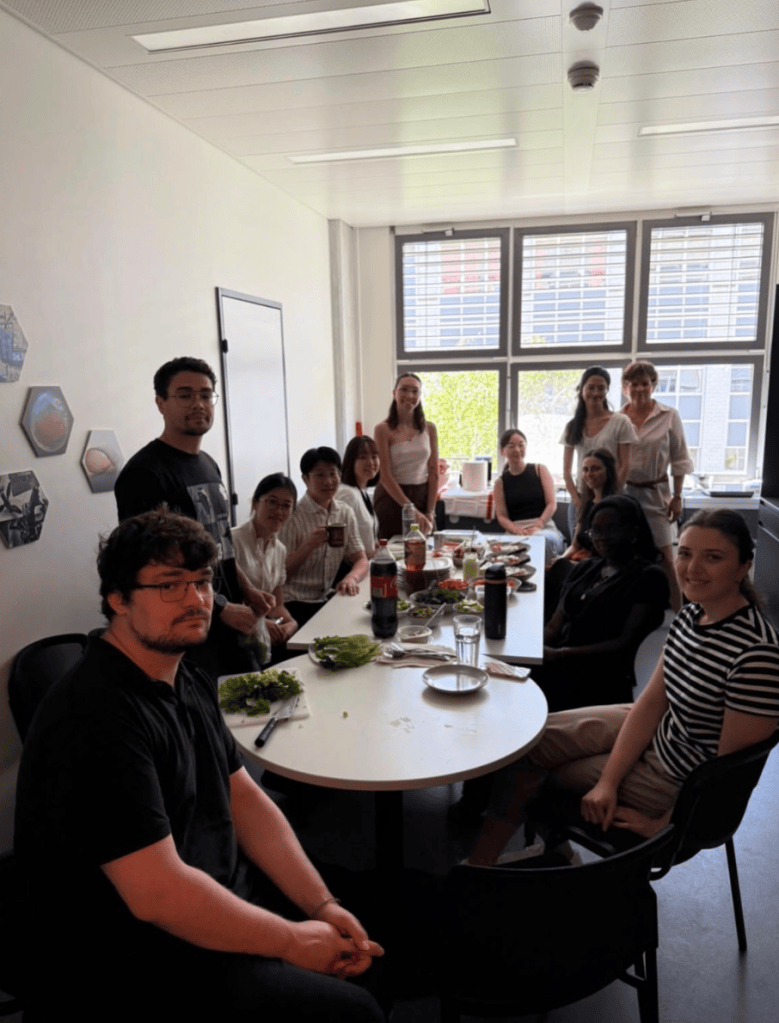
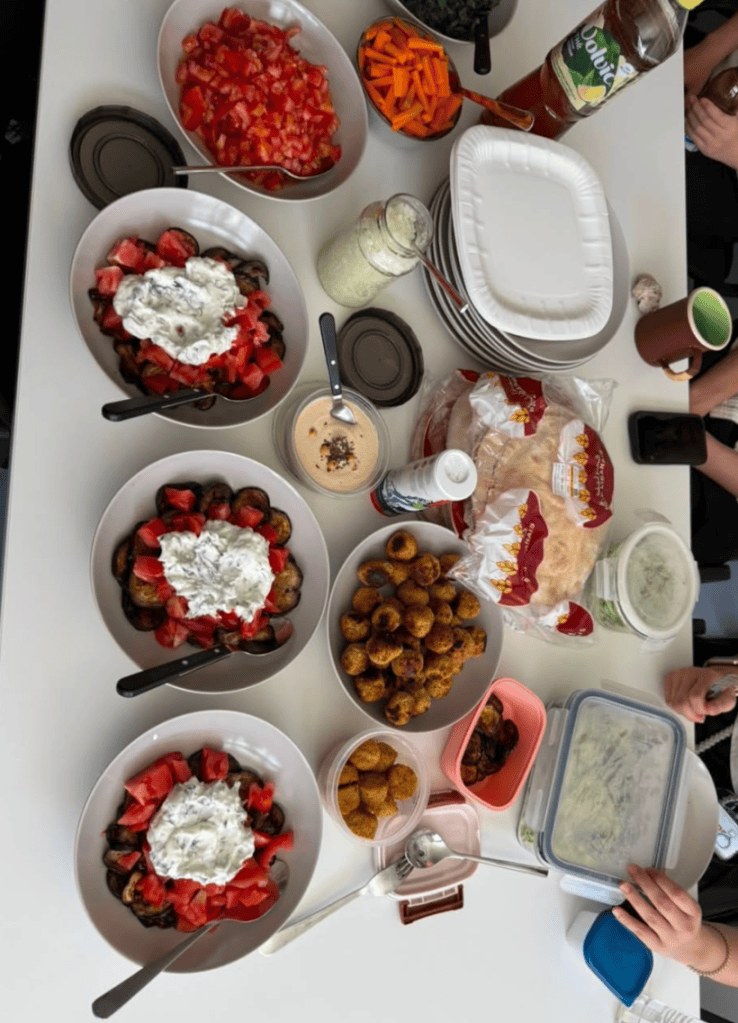
Sustainable Materials Lab, EPFL – Bi-Weekly Group Lunch! – A dish from a different country is shared each time!
Although this is my first time working in a biology-based lab, I’ve really enjoyed the process so far and seeing how mycelium can create these different forms that can be used for tens of different purposes. It has been incredible to see the potentials for mycelium research and also meeting people from across the world in my lab! Despite one of my main missions during MISTI to improve my French, I’ve also been able to pick up a bit of Italian, Turkish, Russian, Korean, and Japanese! In a lab with great minds from across the world, it is so hopeful to see so many different people dedicated to fighting climate change through their scientific research.
Even though I will not miss the lack of air conditioning in many buildings in Switzerland, I will definitely continue to take the lessons I’ve learned through my research, and my lab members and their passion for a better world with their research.
Written by climate and sustainability ambassador Demilade Alade ’29, a chemical engineering major. She interned at Ecole Polytechnique Federale de Lausanne (EPFL) in Switzerland.

