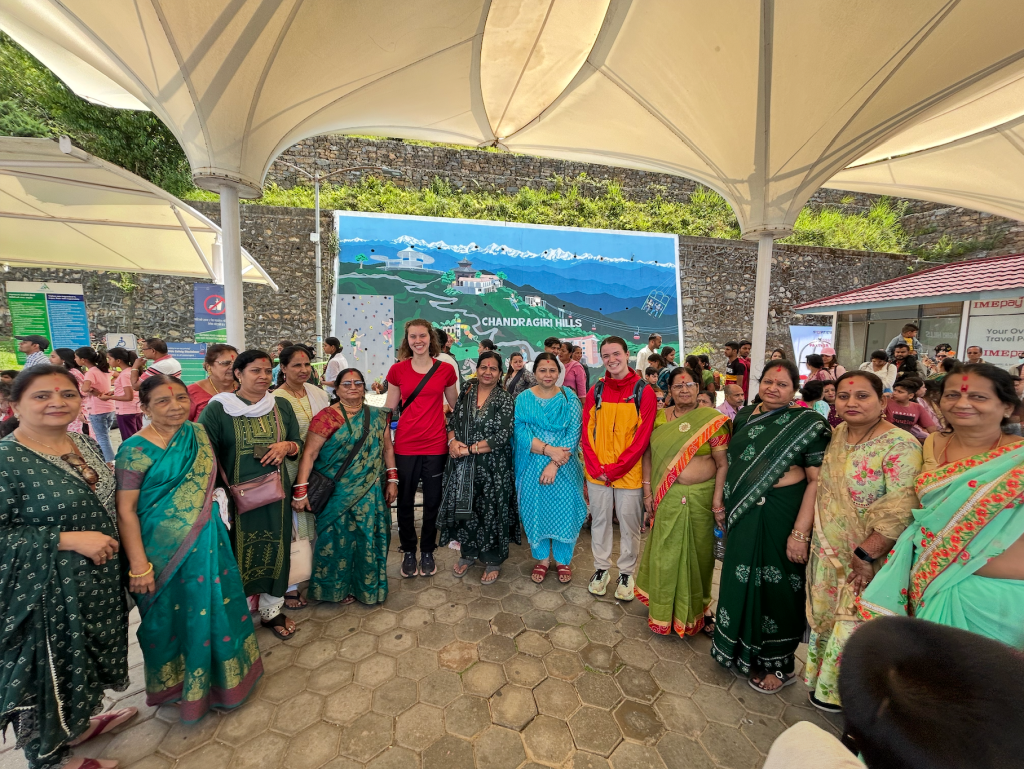
Namaste from Kathmandu, Nepal! I’m Kaleigh, Urban Science and Planning with Computer Science ‘25 and Master’s of City Planning ‘26, and I am interning in Kathmandu Valley, Nepal this summer. I’m working with the Nepal Institute for Urban and Regional Studies (NIURS), an interdisciplinary non-profit that conducts research and creates policy memos to inform urban planning and policy around Kathmandu Valley. Specifically, I am analyzing temperature data collected from satellite imagery and regional weather stations to understand the extent and impacts of the urban heat island effect in Kathmandu City, and I’m writing a policy memo with recommendations for sustainable urban design and climate adaptation strategies for the city. The Urban Heat Island effect occurs when temperatures in the urban center are hotter than in the surrounding regions. This phenomenon can be caused by urban density, lack of green space, traffic, and other factors. Hotter temperatures are detrimental to public health, energy usage, and air and water quality, meaning the urban heat island effect exacerbates many issues already present in Kathmandu. It is also monsoon season here, and hotter temperatures can cause more intense rainfall and storms. When that happens, things like landslides become more common, and it becomes more dangerous to travel on Kathmandu’s already degraded roads. My research can help city planners prioritize climate mitigation in areas of the city that are suffering the most from extreme heat and offer recommendations on how to adapt and help citizens prepare for extreme weather events.

From meeting with city officials, I learned that a major roadblock to climate adaptation in Kathmandu is motivating the local ward authorities to execute necessary changes. Historically, there has been a strong dependence on international aid and NGOs to provide funding and manpower for climate adaptation projects. Local wards lack the staff and financial capacity to implement climate resilient strategies, such as enhancing green spaces and improving cooling infrastructure. Another challenge is enforcing building codes and laws that promote green infrastructure. This is particularly challenging in informal settlements and slums, where local officials may not have adequate resources to enforce such laws or where properties are not formally registered. Increasing the amount of research around the urban heat island effect in Kathmandu can help make the case to local authorities that climate resilience is essential to community wellbeing and should be prioritized. The satellite imagery I used in my research clearly shows a spatial difference in temperature between urban and rural, with less vegetated, denser areas measuring hotter temperatures. Additionally, across the past three decades, weather stations throughout Kathmandu Valley measured increased average maximum summer temperatures, and stations in the urban core measured an increase in the average minimum winter temperatures: the hottest summer and coldest winter temperatures are increasing, particularly in the urban center. Evidence like this is critical to communicate clearly and effectively to local wards to advocate for action.
While climate change causes similar problems in Kathmandu as in the United States, like health and infrastructure concerns, the problems seem much more urgent in Nepal and I’m experiencing the challenges daily. The rain often leaves the streets muddy and slippery, making it harder to navigate on foot or by car. The heat can also put more demand on energy or damage power lines, and sometimes the electricity goes out randomly throughout the day. This is especially frustrating when our electric fans go out in the office, or when my laundry stops mid-wash and my clothes get locked in the machine!
The community and social connectedness in Kathmandu make up for the challenges and frustrations of unreliable infrastructure. A lot of social interaction and commerce happens in the streets (literally in the streets – I have to watch out for motorbikes zooming by). Housing is also very dense, so I’ve gotten to know my neighbors and I enjoy giving out “Namaste”s, high-fives, and bits of chocolate to children playing in the streets. People tell me these social networks help them feel happier. They also play a big role in addressing climate change, as they facilitate knowledge-sharing, trust, and awareness of issues and potential solutions, encouraging community members to do their part to protect the environment. People here are so kind: they are always wanting to chat with me or offer a friendly smile. They teach me every day how important it is and good it feels to be open, gracious and caring!

Another climate-positive thing about Kathmandu is its reverence for nature and local products. Nature and the Himalayas hold great religious and cultural significance, and many products are hand crafted or farmed nearby. I even got to try my hand at traditional backstrap weaving, using hemp to make a handbag. All of the weaving materials – cotton, hemp, buffalo leather and plant-based dyes – are collected from rural villages throughout Nepal. The craft has been passed down through generations and has historically provided employment and a source of income for Nepali women. The weavers were so excited and proud to share their art, but also expressed concern that less people are learning the weaving techniques. They are making an effort to promote the craft through their local shop and educate tourists and locals alike about its cultural significance and economic purpose.
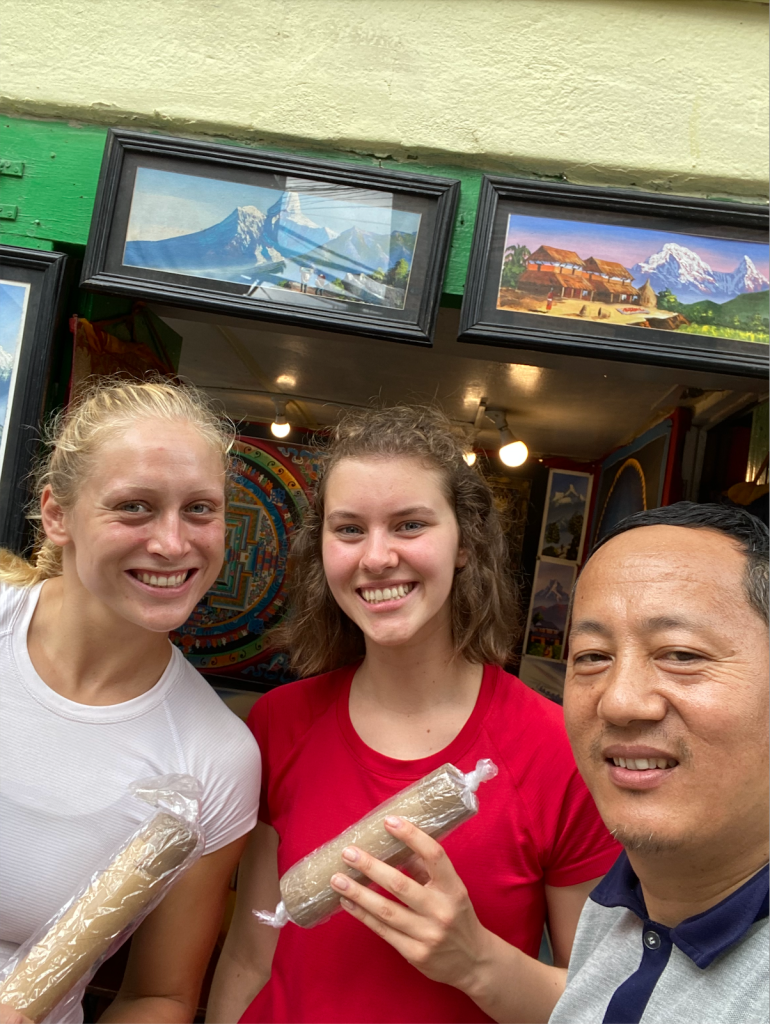
I also enjoy seeing all of the vegetable and fruit vendors in the streets early in the morning with fresh harvests. It has been rewarding to see how these local economies operate and are celebrated in the culture and lifestyle, and I will carry these perspectives back with me to the States as I consider my own role as a consumer in our economy.
While my research highlights the rising temperatures, unstable weather patterns and environmental challenges plaguing Kathmandu, the lessons I’m learning here about connection and helping one another are just as important, if not more important, in addressing the global climate crisis. I’d love to take these lessons farther into my MIT career and beyond, creating spaces that facilitate and inspire the connection, knowledge-sharing, and community that appear so valuable and enjoyed amongst the residents of Kathmandu. It can bring people such joy to celebrate our shared and different histories, crafts, and traditions. Kathmandu showcases many different religions and cultural traditions thriving together, and embracing this diversity brings people pride, devotion, and a sense of responsibility toward caring for their community and environment. I’m leaving Kathmandu with a renewed hope that the climate challenges of our time can be mitigated if we are open, sensitive, and lean on one another to work toward our shared sustainable futures.

Hello, my name is Kaleigh ’25, studying 11-6 (Urban Science and Planning with Computer Science) and I interned with the Nepal Institute for Urban and Regional Studies (NIURS) this summer in Kathmandu, Nepal! 🇳🇵
 MISTI Blogs