One of the biggest reasons why I chose to spend my summer in Singapore was because it would give me an opportunity to explore Southeast Asia, and that’s exactly what I’ve been able to do. Within my first two weeks in Singapore, I had already doubled the number of countries I had visited in my life. From Singapore, countries like Malaysia, Indonesia, Thailand, and Vietnam are only one to a few hours away by bus, ferry, or plane. And the best part is that it would cost a fraction of what it would from the U.S.
Before this summer, I had never set foot in Southeast Asia, even though I have always wanted to visit the region since I was young. As I looked at the map for destinations near Singapore, there was one country that stood out, seemingly so close on paper yet somehow still distant in my mind: Vietnam. It was a place I’d been connected to my entire life but had never actually seen.
As a Vietnamese-American, people often ask me, “Do you like Vietnam?” or “Do you go back to Vietnam often?”, and I’d have to admit, “Actually… I’ve never been.” That answer always surprised people and made me feel less Vietnamese in a way.
I grew up surrounded by Vietnamese food, language, and community, but only within the U.S. Everything I knew about Vietnam came from family gatherings, the Vietnamese church I attended every week, and stories passed down from my parents, aunts, uncles, and cousins who grew up in Vietnam. Vietnam has always been a huge part of my identity, but it also felt out of reach. People would always say, “You have to visit!” and I’d agree, thinking, “Yeah, someday,” but I had no idea when I’d have the time or money to actually go.
That “someday” ended up being this summer thanks to the interns I met at the Genome Institute of Singapore (GIS) and their last-minute pivot in travel plans. A few interns at my lab were originally planning a trip to Hong Kong, but when that started falling through, someone tossed out, “What about Vietnam?” to which I overheard and excitedly jumped in the conversation, saying I was down.

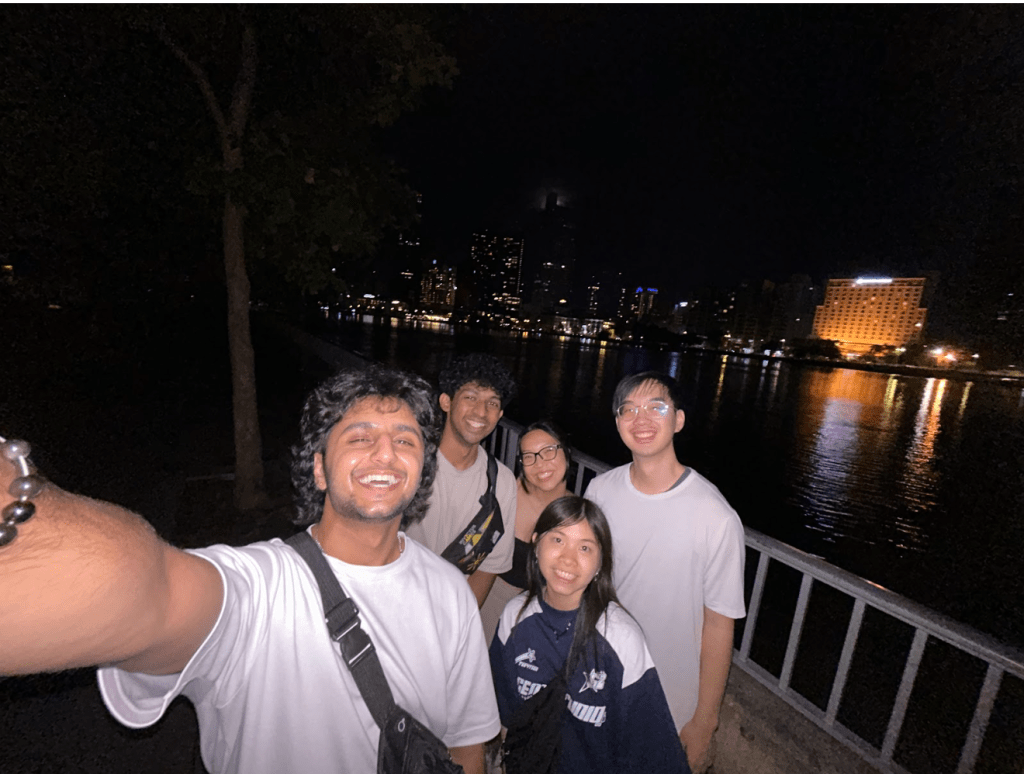
And suddenly, the next day we were already buying plane tickets. While it was definitely a spur-of-the-moment decision for our group—a spontaneous suggestion from an intern, a quick search for cheap flights, and a few messages in the group chat—it wasn’t just another country to check off the list for me. It felt like a place I needed to go.
I ended up being the only Vietnamese person in my intern circle. I felt a mix of pride and pressure. I wanted everyone to love Vietnam: its food, its people, its landscape, and its overall vibes. Even though I had never been to Vietnam myself, I felt like I should somehow know what I was doing—how to get around the city, where to eat, what to say, and how to act—even if I was figuring it out myself just like everyone else.

I definitely didn’t blend in. From the moment I spoke, people could tell I wasn’t local right away just from my accent. Even without saying a word, my mannerisms immediately gave me away: panicking while crossing streets filled with motorcycles, getting overly excited about common Vietnamese pastries, and snapping photos of everything in sight.
But despite how obviously out of place I seemed, people were always welcoming. Grab rides were when I had the longest conversations with locals. Sometimes the drivers were silent; other times they asked where I was from, how long I was staying, what the US is like, if I liked Vietnam, why I chose to “come back,” etc. The words về lại (“return home”) and trở lại (“return”) kept coming up in conversations with locals. “Are you happy to be back?” “How long has it been since you’ve been back?” Even in the U.S., a lot of people would ask, “When are you going back to Vietnam?”
I thought about this a lot. Does it make sense to say “back” when it was my first time there? Maybe it does because my family was from Vietnam? But it didn’t feel like returning home. I grew up in a Vietnamese household filled with Vietnamese people, food, and language, yet Vietnam itself was unfamiliar. I felt like a tourist navigating the busy streets and attractions of Ho Chi Minh.
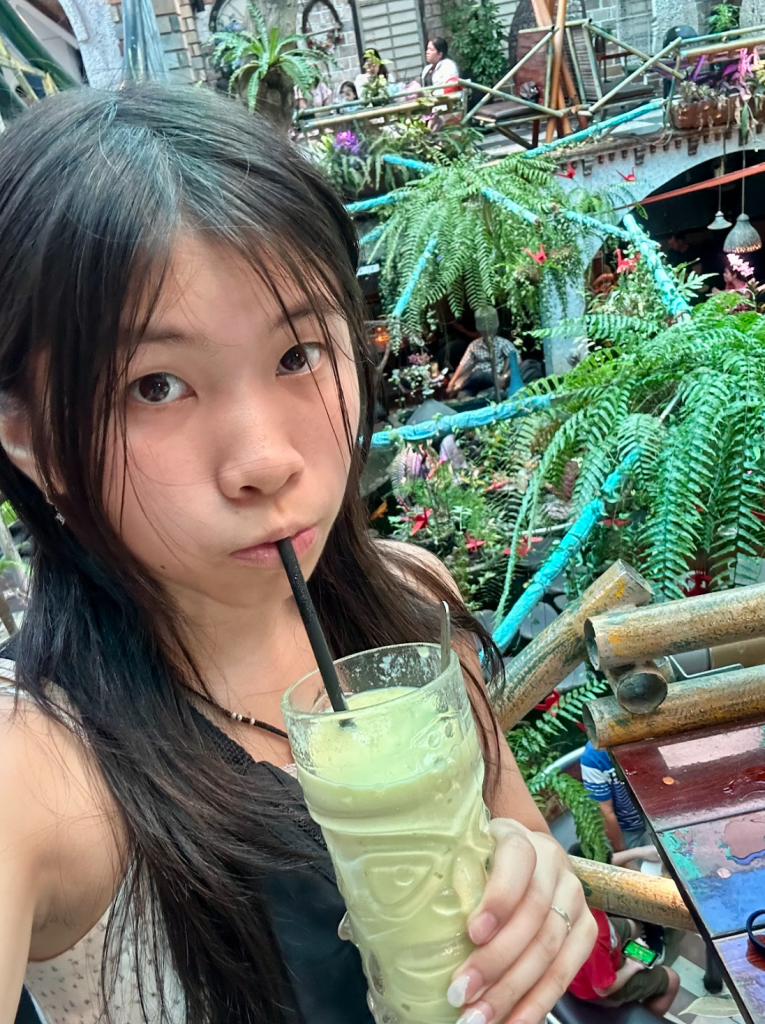
Still, there was something comforting about being there. Many things reminded me of home. I spent the entire trip exploring Ho Chi Minh City, where my parents grew up, visiting the list of places and foods my mom recommended. Vietnamese dishes, snacks, and drinks that I grew up loving were so easily accessible. I probably had at least two avocado shakes every day. The aunties at food stalls and night markets reminded me so much of my own: friendly, blunt, and a little pushy, but full of warmth and affection even if they barely knew me. While the food, people, and language were somewhat familiar to me, there were many things I was not used to, like the chaos of crossing streets filled with motorcycles.

Of course, going to Vietnam didn’t magically make me feel “more Vietnamese,” nor did it feel like I finally visited “home.” I didn’t suddenly become fluent in the language, understand what it’s like to live there, or pick up on every cultural nuance. But I did feel more connected to my heritage. Prior to my visit, Vietnam felt like such a distant concept. I had a vision of Vietnam in my head from stories, but I finally got to experience what Vietnam is like for myself. And I will certainly be coming back.

Vy P. ’27, course 6-3 major, spent her summer in Singapore working with the AI in Genomics Lab at the Genome Institute of Singapore (GIS).
 MISTI Blogs