
Eight weeks have passed just like that since I arrived in Korea. I’ve managed to settle into a stable routine, moving more like a local than ever before. I know exactly how to give instructions to the taxi driver, how to converse with my gym trainer, and the optimal times and platforms for boarding the subway (I must shave every minute off my commute time). Each day at the office starts with ordering a new drink at the café and greeting my coworkers. But as I’ve become more regular, I’ve also realized that the nonstandard cultural baggage I bring—both from MIT and from living in Korea—often places me in a cultural no-man’s land.

At work, for instance, I can follow and contribute to most lunchtime conversations with decent fluency. But inevitably, the discussion veers toward military service or university culture, neither of which I can relate to. South Korea’s mandatory conscription serves as a universal conversation starter among men, and my exemption—since I don’t hold South Korean nationality—marks me as an outsider. Likewise, many colleagues graduated from Seoul National University or KAIST, so inside jokes and shared experiences form an easy shorthand that I cannot tap into. Despite a strong command of the Korean language, these cultural reference points remind me of the limits of my belonging.
This gap surfaced in unexpected ways, too. On a company lunch at a fancy Italian restaurant, I found myself resisting the unspoken norm for Korean men to simply accept bad service without complaint. We were split into five tables of four, and while the appetizers and pasta were fine, the main dish—the ribeye steak—was badly overcooked. Against quiet pressure to just eat it, I insisted that the restaurant could not get away with serving well-done steak when the standard was clearly medium-rare. After some collective whispering on whether to return the dish, my table eventually agreed, called up the server, and received a perfectly cooked replacement. The other tables, however, stayed silent and never got the same treatment. In that moment, I saw how my cultural “in-betweenness” could disrupt the norm: neither fully inside the unspoken expectations of my Korean colleagues, nor fully outside them, I was willing to press for change in ways others would not. It was a small incident, but one that sharpened my awareness of how my presence can unsettle and reshape workplace dynamics.

A different tension emerged when I traveled with MISTI Korea to the DMZ. Many of my MIT peers leaned into their identities as Korean-American or non-Korean language learners, and conversations naturally defaulted to English. For them, this was partly survival—if people assumed they were fluent, they would be overwhelmed by speed and vocabulary. But for me, the experience felt like visiting an older version of myself whose struggles I had almost shed. Returning to an English-dominant space felt strangely dissonant, as if I were being pulled backward into a stage of identity I had worked hard to move beyond. It was comforting in some ways, but also unsettling: I couldn’t fully relax into that identity anymore, even as I wasn’t seamlessly at home in the Korean one either.
These experiences have thrown me into what I can only describe as an uncanny valley of cultural fluency. My Korean has become strong enough that I no longer fit comfortably into the Korean-American identity, but there are cultural limits beyond language that prevent me from fully integrating into my workplace and broader Korean society. Recognizing this has been both humbling and disorienting. It reminds me that cultural belonging is not a finish line one crosses, but a shifting horizon that moves as you approach it.
Unfortunately, there doesn’t seem to be a clear script for how to live in this space, and I don’t know whether I will truly feel comfortable doing so. For now, I am simply learning to sit with this ambiguity, and I hope to self-author a path with new perspectives and insights to offer.
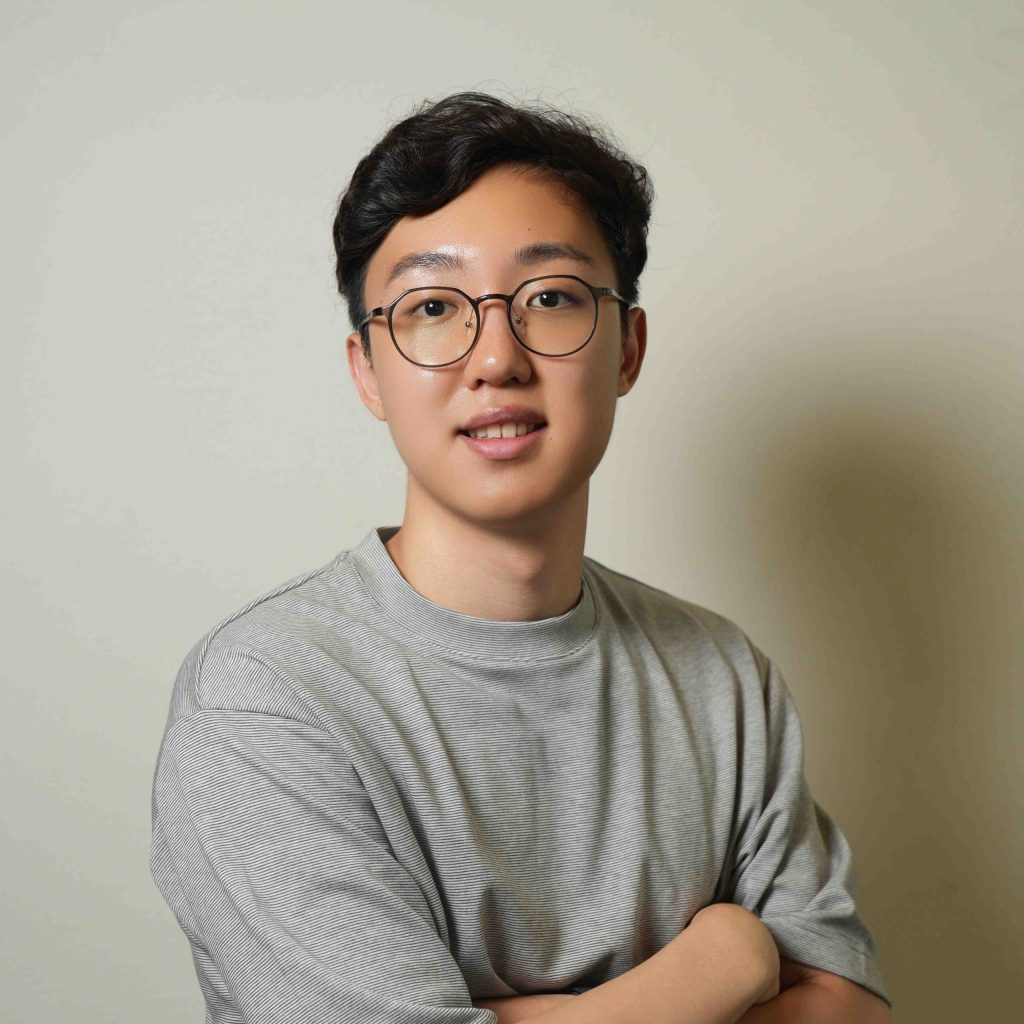
Juni K. ’28, an electrical engineering with computing and mathematics major, worked as an AI research fellow at Krafton in Seoul, Korea, through the MISTI Korea program. His team researched LLM agents for co-playable characters to be introduced across Krafton’s games.
 MISTI Blogs