After six years of running the gauntlet of high school, college admissions, and freshman life, I finally had the time to visit Korea again. In a place that was supposed to be like home and a culture that had always surrounded me, I felt hopelessly lost. The hangul script—for all its external praise for being easy to read—was dizzying hard to keep up with, I stuttered when asking basic questions to service workers, and even the fun stories I wanted to tell my relatives all *had* to go through my mother. Despite her best intentions and effort, my Korean remained a handicap and a barrier to further connection, something that made me distinctly “gyopo” (an overseas ethnic Korean).
Returning back to the US and attending my first semester at MIT, I found an opportunity to go back to Korea via MISTI Korea and the KRAFTON AI Fellowship program. Barely scraping by the tests with some guesswork and linear algebra, I learned that I was accepted in the middle of February and signed right on. But with a relatively light semester ahead, I desperately wanted to do more than just survive those two months.
One day, with all of my psets done ahead of schedule, I randomly decided to learn how to type hangul (something I had procrastinated forever). The input system itself is actually quite well-designed: consonants on the left, vowels on the right, just press each character in the order that you write it. After a brutal few days, I could type at 20 words per minute—good enough for now. I needed somewhere to practice my typing, and what better thing to do than journal each day I spend at MIT? From that day on, I set myself a hard deadline. At 11PM, I would stop making further edits to my journal entry and send it off to my (native Korean) mother, owning all the mistakes I made. Within a month, my orthography had completely solidified; by the next, my vocabulary had massively expanded, and things only got better from there. Suddenly, I could talk word by word without stuttering. Reading hangul became automatic. The relational structures of Korean became woven into my verbs and particles, and slowly, I could see the cultural values I have grown up with in the language that they were built for. “noonchi” (roughly “seeing the environment”), “chaemyeon” (face), “baeryeo” (thinking/doing things for others), these and other Korean words just held way more force than they ever had before.
A week or so after wrapping up my MIT finals, it was finally time to fly to Incheon. When I stepped foot onto our plane, greeted the flight attendants, and read the text around me, I was met not by discomfort but instead by an empowering clarity. I wasn’t speaking, *in Korean*, I was just speaking. I wasn’t just reading *in Korean*, I was just reading. And when I met my grandparents in Seoul and began conversing, things hit the groove almost instantly.
A few days later, when I made that first commute to my company’s office in Yeoksam-dong and began onboarding, the story continued unfolding. I could understand virtually everything in the instruction emails, asking coworkers verbally or via Slack felt automatic, and I could speak to my boss in technical CS jargon (“구축,” “실행,” for building and executing respectively etc.) with my new vocabulary. At our first lunch, I found myself engaging in natural small talk, giving and taking stories about recent research, college life, the inhumanely crowded line 2, and the monsoon season about to hit. During dinner, I was even unironically asked whether I was a Korean international student studying abroad at MIT (!), which affirmed for me that I could truly dance on the Korean conversational floor—something that was only a dream a couple months back.
Navigating this new environment obviously did not come without a few hiccups. I still encounter words I don’t know on a daily basis, especially those outside of the domains I specialized for. I hesitate or misfire on honorific speech—extremely hard to fix since most people will usually politely let them slide. In novel situations outside just work and the apartment (e.g. the bank), I do still occasionally freeze up.
But being able to confidently wield my heritage language in most cases, the clunky “Korean-American” suit is no longer vital; I can just be “Korean” as convenient. My unusual upbringing gets brought up, not in a moment of flustered shame, but in a moment of pride over where I came from. Ultimately, where there was once confusion between my two distinct identities (as MIT American and Korean-American), the rebirth of a pure Korean identity with real expressivity and agency has established separation and harmony among all of them.

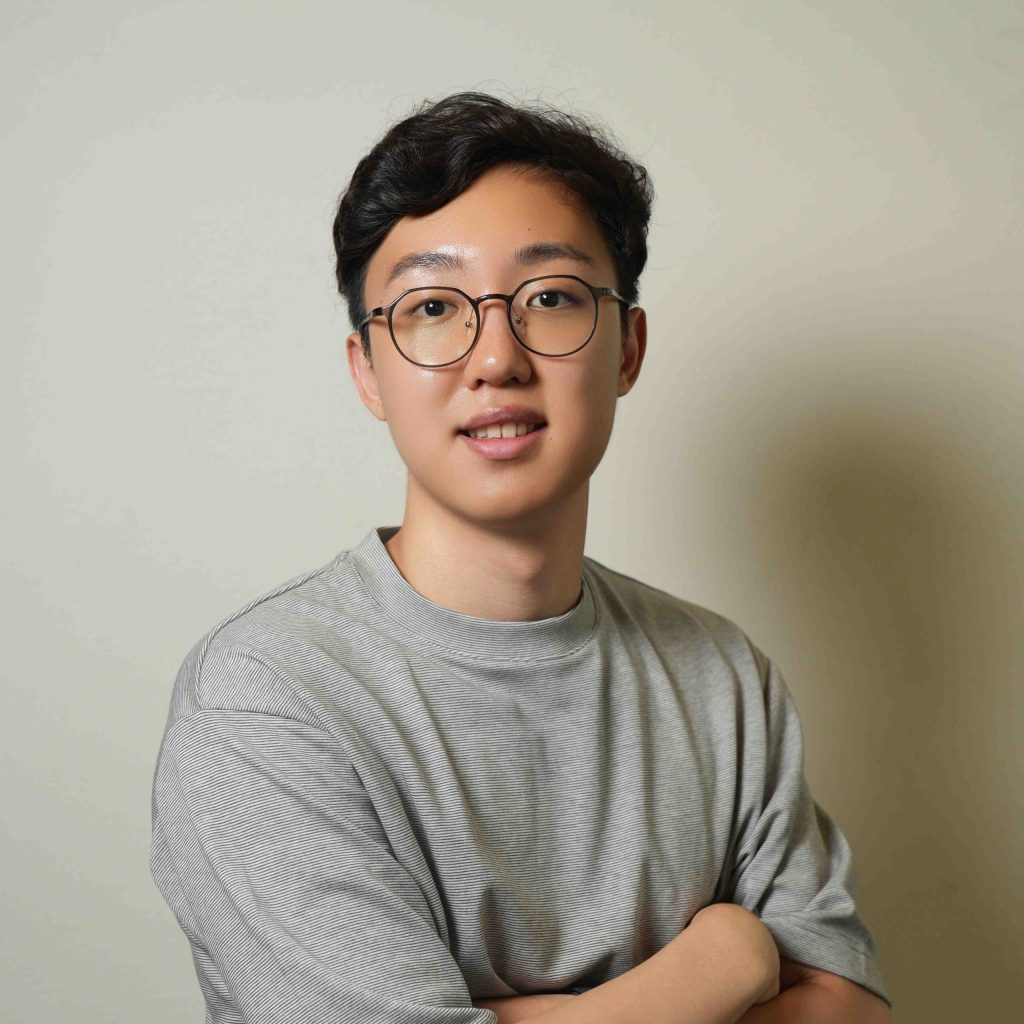
Juni Kim, ’28, an electrical engineering with computing and mathematics major, is working as an AI research fellow at Krafton in Seoul, Korea, through the MISTI Korea program. His team is researching LLM agents for co-playable characters to be introduced across Krafton’s games.
 MISTI Blogs