Intro + EV:
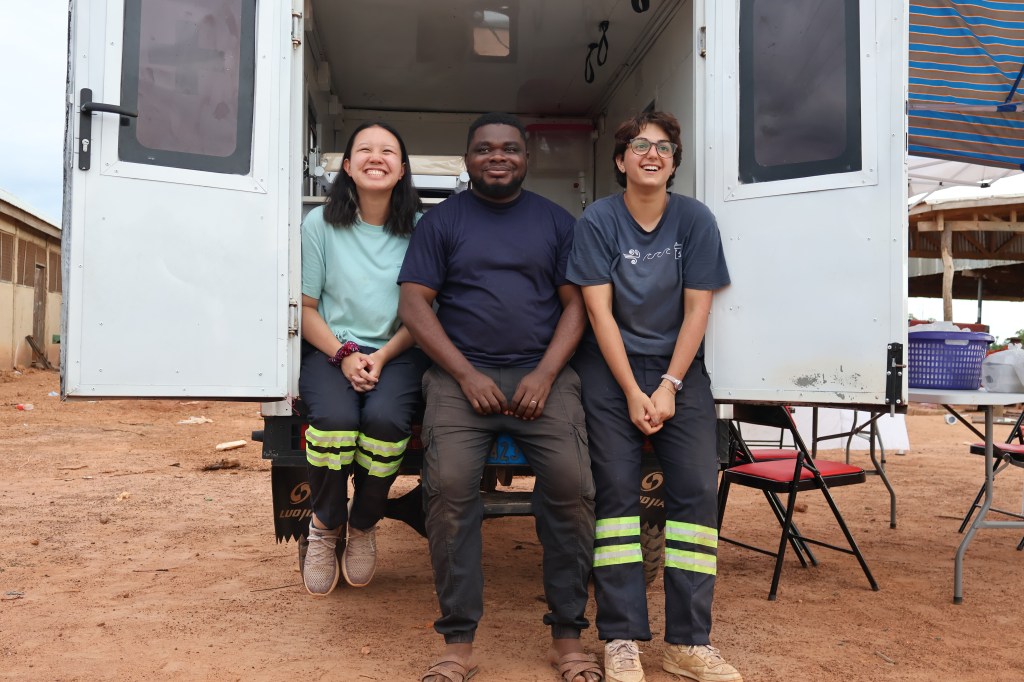
During July, Isaac (Moving Health’s country director), Amie, and I traveled to the Upper West Region in Ghana to fabricate our mobile clinic! We had been preparing for it for the first 2 weeks in Accra and were excited to start prototyping and fabricating. Our goal was to redesign the interior and exterior of the ambulance to create a working space for doctors and nurses.
We flew from Accra Wa, the capital of the Upper West. Then, our driver, Adams drove us 3 hours to Tumu, where our workshop is located. On our way to the hotel, we stopped by the workshop and two little kids sprinted and jumped on Isaac chanting “Uncle Isaac, Uncle Isaac!!” The little kids were the son and nephew of the lead engineer and sometimes passed by the workshop since they were off school. It was so heartwarming and set the tone for the next month – a month full of family-like love. We started work the next day and were immediately greeted by the whole team; they all wanted to say hi and assure us we were welcomed to the workshop and their region :). We exchanged ideas about the mobile clinic and planned the next month together.

For the first week, we wanted to research how terrain affects mileage to inform our EV calculations. Since I’d been working with the MIT research team during the school year, I was in charge of conducting the trials; I would not say I’m a confident person in general, and I am definitely not confident around people I’ve never met before in a town I’d been in for two days. It kind of reminded me that everything is engineering in some ways; I had a prototype in my head about how our relationship would be and how we would conduct the trials, but then we had a meeting before taking off and improved upon almost every aspect. Engineering and life, it seems, are proving to be all about adaptability and collaboration.
EV trials meant we traveled to a ton of communities in the Upper West: Kong, Sakai, Pien, Challo, Kroboi, Nwanduano, Nagubelle, and Kroboi, and got to meet the women at the health centers. They all were so friendly and eager to meet us and help us along our travels. They had so much gratitude towards Moving Health and how they are empowering the community to seek medical care. I loved hearing them talk about Moving Health and knowing I was a small part of this larger mission.


Mobile Clinic:
The cast: Safiyano owns the workshop and is commonly referred to as “the Engineer” around the shop and surrounding communities. The lead fabricator is Ambra, who is incredibly crafty; Fatawu is the senior apprentice; Ambra has 3 apprentices: Bayong, Ruyan, and Saraj. Everyone I’ve just mentioned is related to each other!
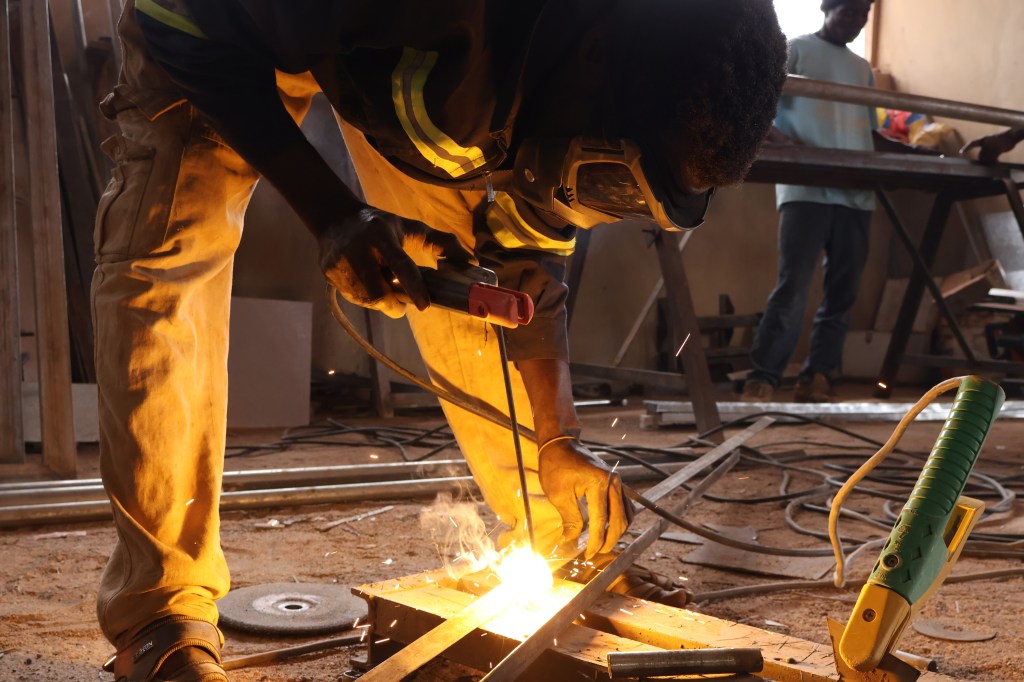
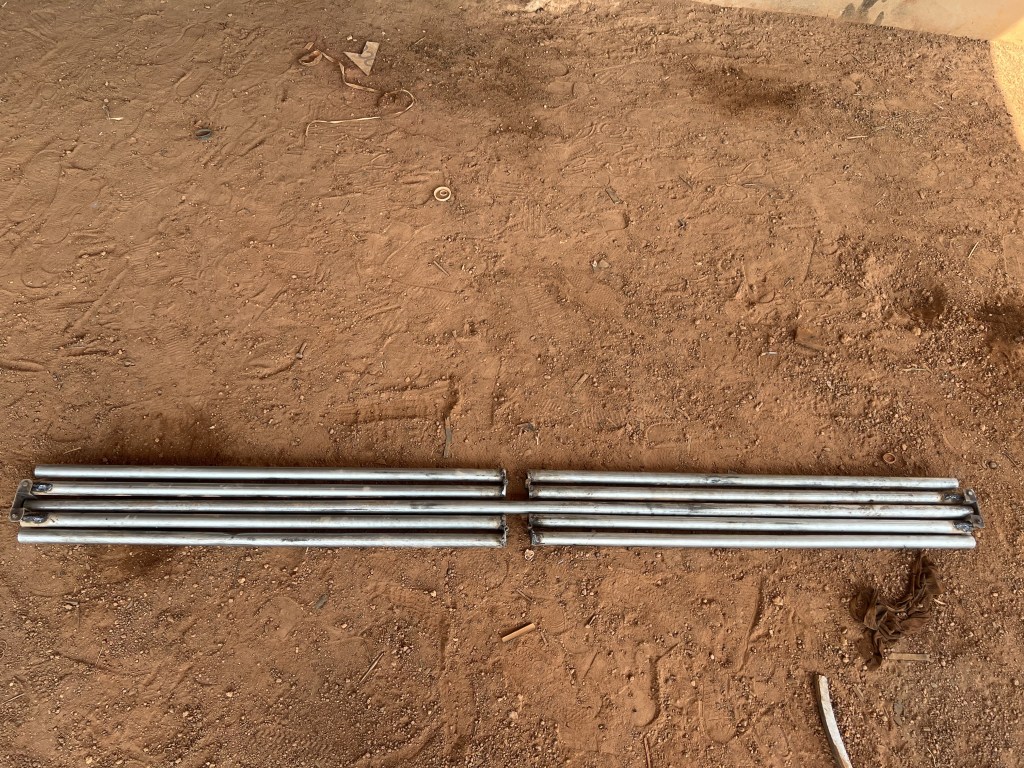
We split the mobile clinic project into two sub-projects: Amie would work with Safiyano on the interior + powering, and I would work with Ambra on the exterior. We soon started fabricating, and I saw in person how brilliant the engineers and apprentices were. Their minds are just so incredibly sharp and experienced. For example, we needed two pipes to fold and straighten but we couldn’t find hinges that fold correctly. I’m used to looking at shops further away until we find someone who has the right ones; Ambra instead went five minutes down the road, bought some sturdy-looking hinges, then spent no more than three minutes disassembling them, then re-welding them back into the perfect hinges for the job. Ambra and Safiyano are constantly thinking about how to make things in the simplest way possible and it’s incredibly impressive to me. They just make things work! From the first day, I was excited to learn how their brains work and hopefully pick up some of it myself.
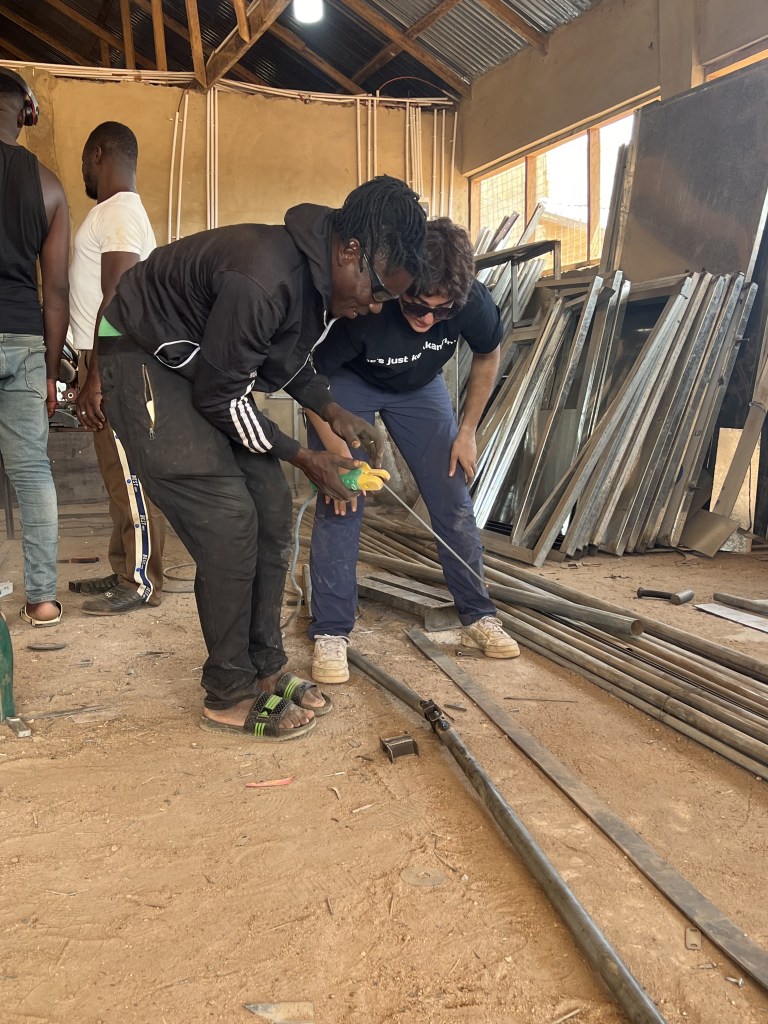
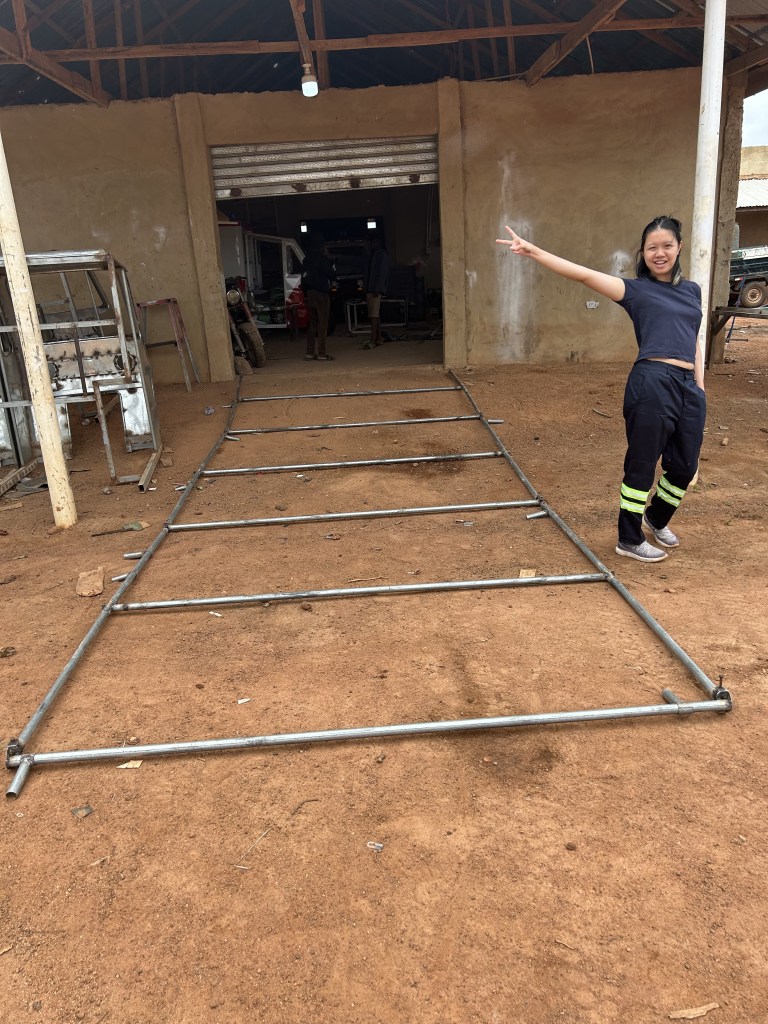
The tent was a very product-centered 2.007-like project: we were constantly thinking of the user experience and how to make the simplest mechanisms. I don’t have much practice with product design or moving objects, so combining them was definitely a challenge for me. Like 2.007, we were essentially constantly prototyping and there were tons of failures (mis-measurements, challenges in user experience, weak structures) and it was honestly really hard to get used to. I’ve heard my whole life that failures are good because the more you get used to failing, the less you fear them and I think this was the first summer I actually lived out that experience.
I felt really lucky to be surrounded by such innovative and kind superiors; as soon as a failure came about, we immediately brainstormed solutions. Before working at Moving Health this summer, I was an indecisive person–afraid of the potential failure of the wrong decision. During the internship, I had the space to make those mistakes in a safe environment and have thus become more decisive. I’ve realized now that because I was so scared of making a decision, I was not growing my intuition for when things were leaning in the right or wrong direction. Every time I make a mistake now, I know how to spot the warning signs for the future.

Thanks to Isaac, every failure was an opportunity for growth and I am very grateful that he has such high standards because it led us to make a product we’re truly proud of. Working with Isaac was an exciting experience for sure. He’s one of the most brilliant people I’ve ever met and is always thinking of the user experience. During his time off, he’s developed AIs, taught himself to code in several languages, and listens to Big Bang Theory like “podcasts.” He’s also a chillin guy – people say hi to him around town, and he knows all the highest quality food spots.
Approachable superiors were something I experienced universally in Ghana. Ambra and Safiyano are fabrication leads, and Isaac is the Country Director and CTO, but we regularly ate meals together and even goofed around sometimes. Most of the people in the workshop are part of the same family, so they have a lot of family love for each other – working in their shop, I also felt like part of their family. We were always invited to eat with them (and thank god for that – they knew where to find the YUMMIEST food in town). When I got a burn, Ambra dropped everything to get some water for me and so much more.
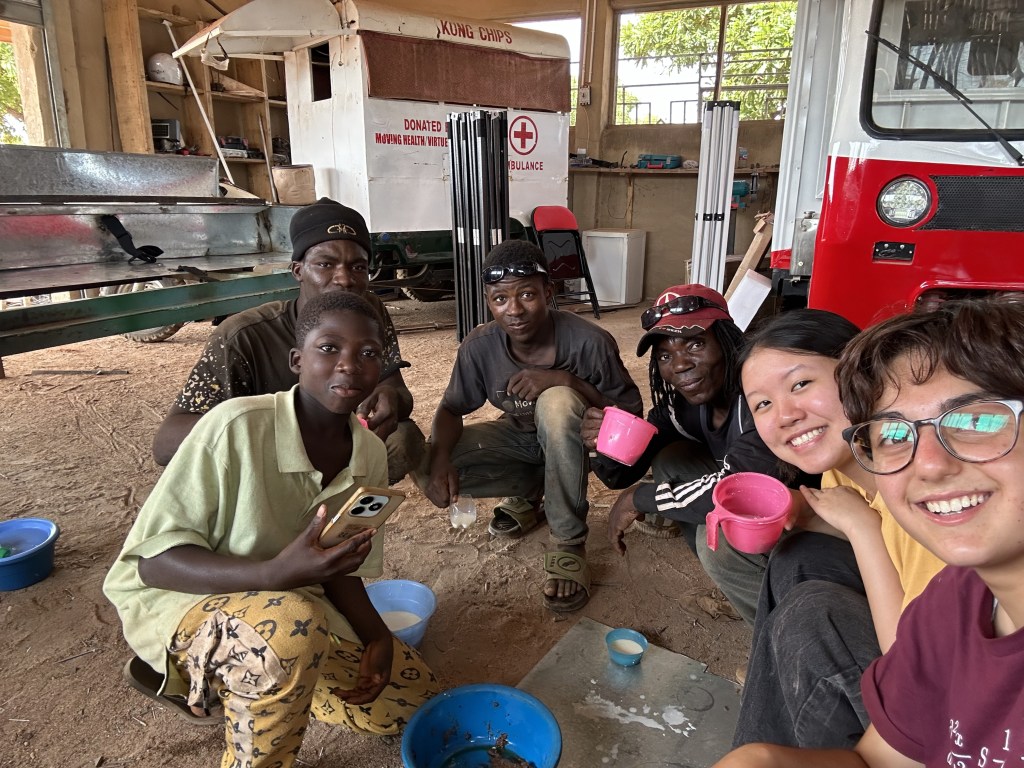
Having lunch 🙂 We are drinking unpasteurized milk + yam flour + sugar — it kind of tasted like boba! 
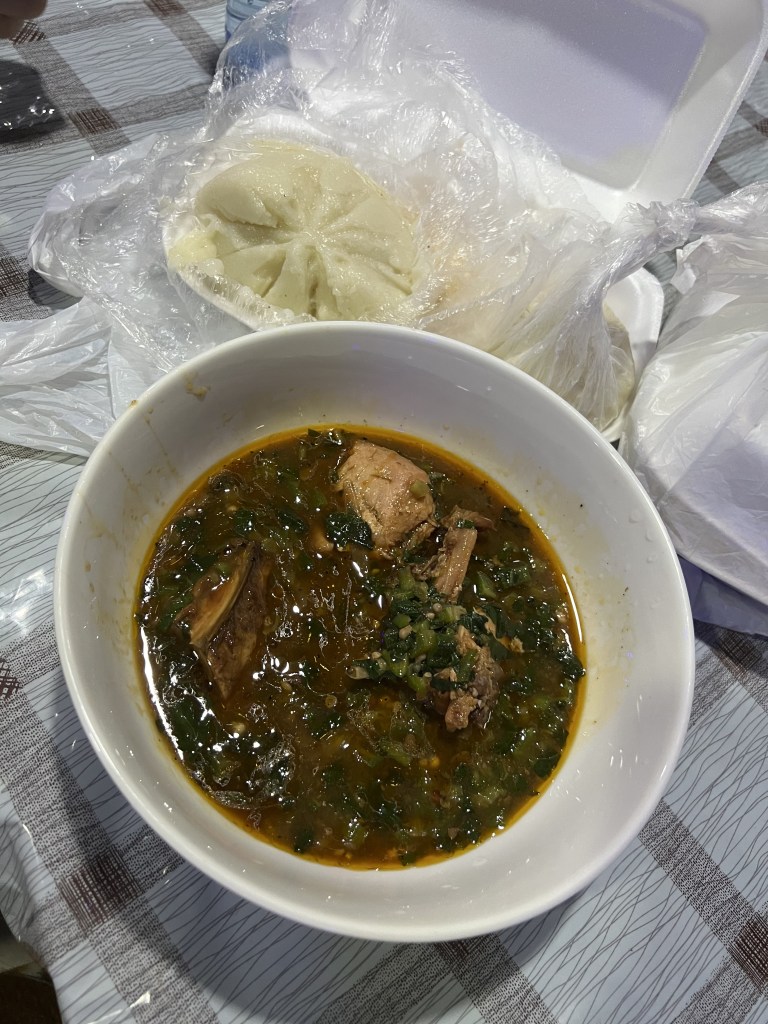
Kara was so insanely delicious — it’s mashed beans cooked inside leaves to gain flavour and texture then eaten with a pepper spice mix. It has the texture of jello and the taste of a thousand nectors from the Greek Gods.
As a white-passing person in America, I don’t really think about my skin color every day – I was expecting to feel a bit like an outsider in Ghana and the Upper West but I felt the reverse. As a visitor, people treated us with kindness and open arms – they taught us more about their language, customs, and traditional foods and wanted us to feel at home. In the US, there’s a large contingency that wants to greet differences with hostility and extreme assimilation; by contrast, in the Upper West, we were greeted with warmth and a desire to share their culture instead of enforcing it. They didn’t shy away from our differences, and we talked about them freely – I appreciated how nothing was taboo; talking about sensitive topics amicably is definitely something I want to do more of in the US.
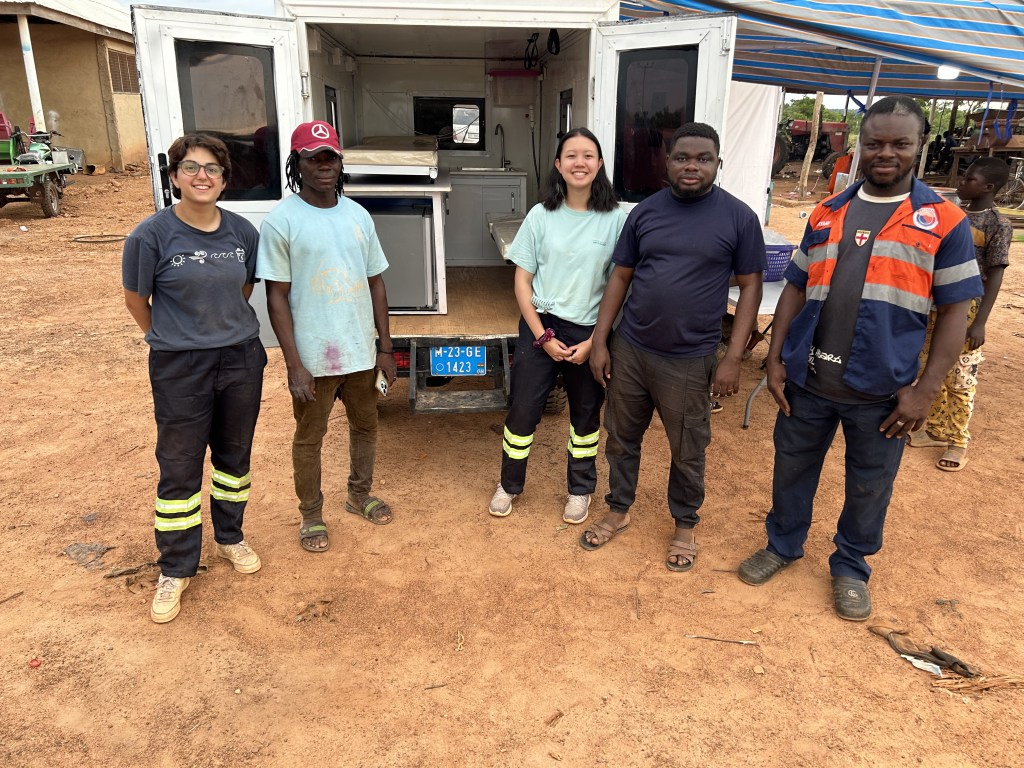
Back to the mobile clinic, after a month in the Upper West, we were so happy with the final product! Amie and Safiyano’s interior features cabinet space, a solar-powered electric generator, a collapsible stretcher, power outlets, a fridge, and a sink! Ambra and mine’s tent folds out of a box from the top of the ambulance and is color-coded for ease of assembly. It has various locking mechanisms, which makes it much stronger than other tents found in both Ghana and US markets.
Scroll through the photo gallery of the mobile clinic and the engineering team!


Back to the US
8/9/24: I’m now back in Boston resetting my internal clock and finishing some final reports before heading to Camp Kesem for a week. I’m so thankful for such a rich, lovely and welcoming experience in Ghana – I could not have asked for a better summer experience! It’s funny how if you spend enough time somewhere it then becomes your new comfort zone – I’m starting to think that maybe life is all about collecting all the comfort zones you can.
8/21/24: I’m back home in California, and I haven’t gotten rid of this nagging feeling that something is wrong with the food in the US. It’s like there’s a flavor missing or something inorganic in the food here, but either way I miss Ghanaian food – I had a dream about their jollof rice last night haha.
I listened to a The Daily episode about air conditioning yesterday and the reporter said being comfortable being uncomfortable is necessary going forward. In this context, she explained that if we got used to a lack of AC then we would be able to survive in our environments more effectively since our bodies would grow accustomed to the natural environment. Seems like a pretty good motto to life to me. I feel like we usually fabricate our own environment instead of listening to the world – we’re made to form a tribe (aka the homies), sit on the grass and eat with others, and be good to the world. It makes me want to be more in tune with the world and myself.
Hi there! I’m Maya Ayoub a member of the class of ‘26 studying Mechanical Engineering. The past summer, I interned with Moving Health in Ghana to electrify ambulances!

 MISTI Blogs