Hello everyone! I am Carissma McGee, a graduate student at MIT currently experiencing the vibrant and diverse culture of Morocco in the coastal city of Casablanca with MISTI Arab World! During my time here, I’ve learned about traditional customs and modern developments I’ve also witnessed the efforts and progress made to empower women within the global tech industry and workforce. This journey has opened my eyes to the nuances of Moroccan society and the ongoing efforts for technology-based startup companies in this beautiful country.

Carissma visiting the Hassan II Mosque (Arabic: اﻟﺛﺎﻧﻲ اﻟﺣﺳن ﻣﺳﺟد, French: Grande Mosquée Hassan II) is a mosque in Casablanca, Morocco. It is the second largest functioning mosque in Africa and is the 14th largest in the world
Traveling through Morocco, I have learned that Moroccans are known for their hospitality and tolerance, but it is essential to respect their cultural norms, especially when it comes to clothing and behavior. Dressing modestly is crucial, particularly for women. I was able to visit with our internship group, the more rural farm areas of Settat, where it is the norm to wear clothes and coverings that cover from wrist to ankle. In more populated city settings like Casablanca, where I reside, attire styled to summer fashion trends were customary, still following within more appropriate attire honoring the religious customs. As a visitor, I have adapted by wearing loose, modest clothing to respect local customs, especially when visiting more sacred places like the Hassan II Mosque (اﻟﺛﺎﻧﻲ اﻟﺣﺳن ﻣﺳﺟد, Grande Mosquée Hassan II), the second largest functioning mosque in Africa and the 14th largest in the world.
Understanding the cultural context and the interdependent self-concept prevalent here has helped me learn to appreciate how vital family is. This appreciation has allowed me to experience Arabic hospitality, be welcomed warmly, see the excitement when individuals learn I am from the United States, and be offered to visit places and homes as well as receive free items.
Living in Casablanca, I am constantly learning about the cultural nuances and gender roles prevalent in Moroccan society, which extend beyond attire. For instance, while passing by populated cafés, restaurants, and recreational areas, I noticed that I rarely saw groups of younger women in their early to mid-20s hanging out outside together or walking alone, especially in the evening without a man accompanying them. One memorable interaction was with a peer who shared her perspective on the role of women in Moroccan households. She explained that in traditional families, women often take on the role of managing the home, a position that is highly respected and valued. It was common for younger adult women to be married and family-oriented, which was different for me to learn as, in the US, this may be seen as “settling down” or raise questions about career focus and longevity. This idea was apparent in the vast amounts of fresh food and produce in the markets and stores, specifically a chain called Marjane, where fresh food was abundant, and pre-prepared meals were rare, as it was expected that someone was home to prepare the ingredients. Understanding the cultural context and the interdependent self-concept prevalent here has helped me learn to appreciate how vital family is. This appreciation has allowed me to experience Arabic hospitality, be welcomed warmly, see the excitement when individuals learn I am from the United States, and be offered to visit places and homes as well as receive free items. Dining in Morocco has also been a unique experience. In local cafés or when invited to a home, it is customary to eat with your hands, and eating from a communal plate, taking what is immediately in front of you, is a sign of respect.

Carissma experiencing a traditional Moroccan prepared meal on a farm near Settat. We enjoyed beef tagine with poulet (chicken), a symbol of hospitality and togetherness! Families and friends gather around a communal tagine, using flatbread to scoop up the contents, fostering a sense of unity and conviviality.
While I have had a great experience as an international student traveling, feeling safe identifying as a black woman, and as a US citizen where this country and Morocco have a Treaty of Friendship, I recognize my privilege as a woman in the tech industry and how the push for women’s empowerment here has been long-standing. Women’s roles in Morocco are deeply respected within the home, but traditional views are challenged by the Moudawana, the Moroccan family code introduced in 2004, which enhanced women’s rights in marriage, divorce, and family matters (McMillan, 2022). However, traditional values persist. For example, although the minimum marriage age is 18, judges granted exceptions in 90% of cases involving minors in 2010 (Vagt, 2024). Education is critical for gender equality, but in rural Morocco, 78% of girls aged 12–14 are not in formal schooling, limiting their job opportunities. According to the International Monetary Fund (IMF), only 25% of women participate in the formal economy compared to 66% of men. If women’s employment matched that of men, Morocco’s income per capita could be almost 50% higher (Nzekwu, 2019). Economic independence is also a challenge, with tax deductions and credits typically available only to men unless a woman proves she is the sole legal guardian.
Women empower women
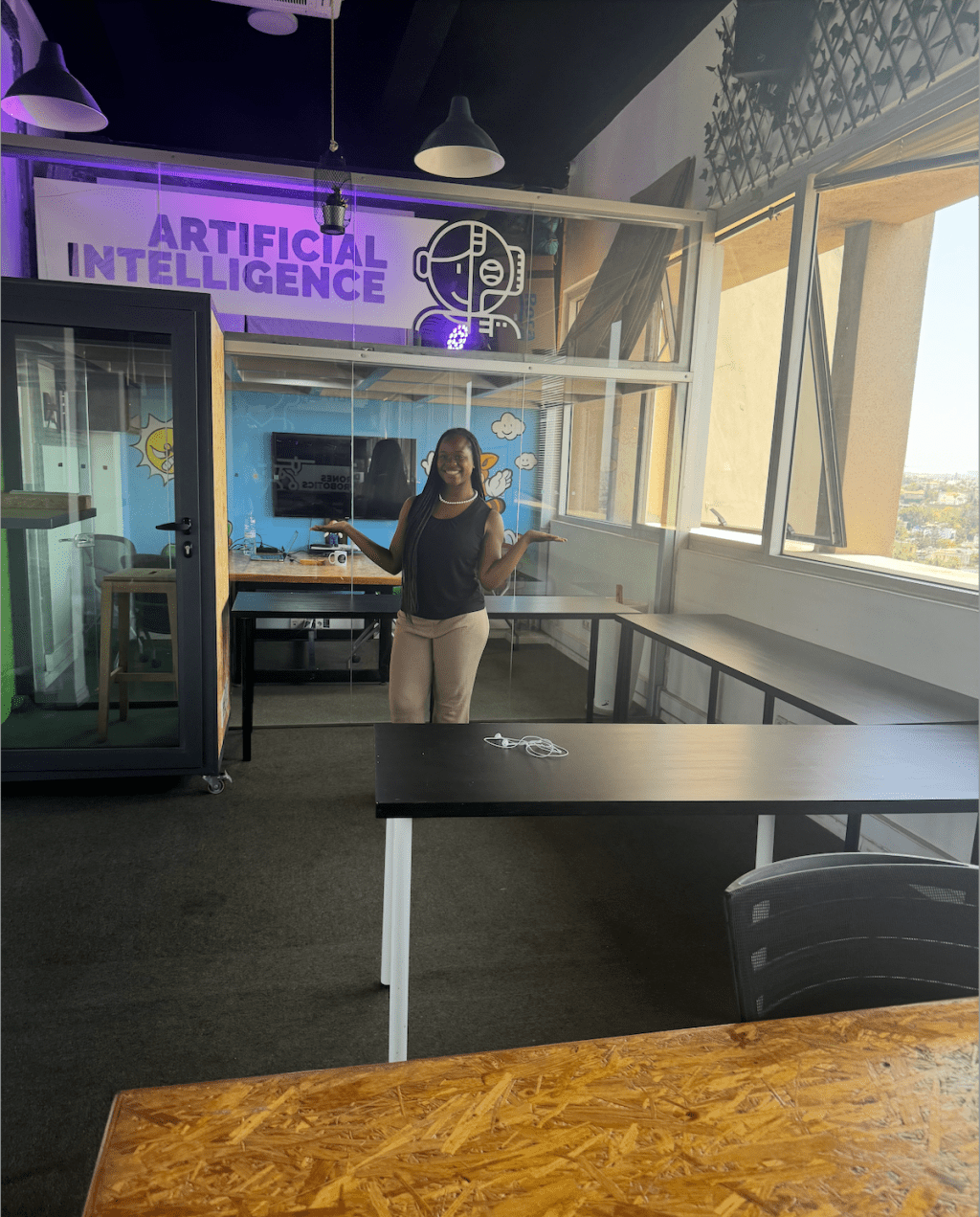
This summer, I am thrilled to be part of the first internship cohort at AI Shore in Casablanca, Morocco. Working at AI Shore has been an inspiring experience, largely because of the incredible women leading the charge here. Malika Ahmidouch, the co-founder of AI Shore, is a powerhouse of knowledge and experience. Before launching AI Shore, Malika accumulated extensive experience in investment banking in the United States and has been working in the tech sector in Morocco for over a decade. Her journey from engineering studies in France to becoming a tech leader in Morocco is truly inspiring. Malika’s leadership at AI Shore exemplifies the potential of women in tech and their ability to drive innovation and change. Being surrounded by such talented women, including my fellow intern from MIT, Laura Xia, has reinforced my belief in the importance of women empowering each other in the tech industry. The Technopark Maroc’s “Women Empowered” program is another testament to the ongoing efforts to support and mentor women entrepreneurs in Morocco.
My work in STEM in an Arab country like Morocco has opened my eyes to the significant progress being made in the region. Morocco, with its progressive legal systems for women, offers equal access to political and economic life
My day-to-day at AI Shore is filled with learning and collaboration. From working on AI projects to commuting through the bustling streets of Casablanca, every day is an adventure. The experience of working in a women-led startup has been empowering. It has shown me the impact of strong female leadership in the tech industry. I have also had the opportunity to explore local recreational clubs, such as visiting a woman-owned Pilates studio, which has been a refreshing and empowering experience and one of the examples I could find a space just “for the girls” here!

Carissma visiting the AI Start Up sector in Technopark!
My work in STEM in an Arab country like Morocco has opened my eyes to the significant progress being made in the region. Morocco, with its progressive legal systems for women, offers equal access to political and economic life. Participating in these reforms and working at AI Shore has shown me the importance of women in STEM. Working in Technopark, the Startup capital of the city, I was able to research and view events hosted here for local students and communities, one being for empowering students in the arts and another being the “TechWomen program,” which connects women leaders in STEM from various regions with mentorship opportunities in the U.S., is a testament to the strides being made. This initiative, along with others like the “#She_Is_A_Scientist” campaign, underscores the global commitment to advancing women’s roles in technology and leadership happening right here.
My time at AI Shore in Casablanca has been transformative, deepening my understanding of women’s empowerment in tech and STEM and highlighting the importance of cultural respect and learning. I look forward to bringing these lessons back to MIT and continuing to advocate for women in tech. I advise future interns in Morocco to not only fulfill their responsibilities and research the tech sector’s growth in their community but also actively find ways to empower others.
Carissma McGee, a graduate student at MIT AeroAstro, experienced Morocco’s vibrant and diverse culture in the coastal city of Casablanca through the MISTI MIT-Arab World program. She interned at AIShore, using data, analytics, and AI to leverage multi-cloud data solutions and optimize IT operations with AI services for innovation, efficiency, and strategic decision-making.
 MISTI Blogs
One response to “Empowering اﻟﻣرأة (Women) in Tech: A Journey Through Casablanca, Morocco”
[…] the MISTI blog, Carissma McGee (STAR Lab) writes about her experience working and traveling in Morocco with MISTI Arab World, highlighting the ways women support each […]