As I’ve roamed Mexico City since I arrived, I have been thinking about my first impressions of the Mexican capital. They emerged years ago as a child in Atlanta, when my mom would tell me about her wish to experience the city’s art, and museums, and enjoy its cuisine. Although I grew up visiting Lima, Peru, my mom’s hometown, it wasn’t until a childhood visit to “el DF” (distrito federal, as it was called then) that I appreciated the vastness of Latin America. Spanish-speaking Latin America stretched far beyond my grandparent’s block and Mexico City was arguably its urban center. Eventually, I would be driven to read Octavio Paz’s insightful observations about Mexican culture in Laberinto de la Soledad and watch Salma Hayek’s portrayal of famed Mexican artist Frida Kahlo in the film Frida. Seemingly the epicenter of counterculture, I imagined Mexico City as a bohemian place where artists and writers alike abounded. After learning about its role as a home for Latin American exiles escaping right-wing authoritarian governments and as a cultural hub for television and cinema, I often wondered when I, too, would have the chance to find refuge in the city.
Since arriving in Mexico City, removing this childhood visit from my mind has been difficult. As soon as I landed, I approached the city with reminiscent childlike wonder. Where was the free-spirited home to Chilean writers and Peruvian revolutionaries? I thought I might run into Octavio Paz like a character does in Roberto Bolaño’s Los Detectives Salvajes. I suppose I wanted these things selfishly; like any traveler, I came to Mexico City with expectations. I wanted to rediscover the Latin parts of me I stash away when I’m in the US and search for answers to existential questions commonly posed in graduate school. Naivete at its worst, I longed for evenings of inspiration in the everyday spontaneity of such a large city.

Inspiration does not run short here, and while I encountered the vestiges of the city’s historical past, I was also confronted with crowds of fellow Americans, mainly those of the pandemic-era digital nomad variety. They were suddenly fascinated by a city they had long dismissed as too unruly and dangerous (a la Dead Man Walking, where Denzel Washington rescues Dakota Fanning from kidnappers in Mexico City), but was now suddenly Vogue- and New York Times-endorsed. What has followed was, by no exaggeration, a gringo-driven gentrification of two colonias (neighborhoods) of the city, in particular—La Roma and La Codensa. There is an abundance of trendy cafes with an LA-meets-New York vibe in these neighborhoods, but many feature English menus and “mild” chile sauces. After spending seven years living in California before MIT, where neighborhoods like the Mission District in San Francisco have seen rapid declines in Latino populations, I can see the striking similarities of this gringo invasion with urban processes in the US. These parts of Mexico City have unmistakably changed, and many chilangos have started to grow frustrated by the soaring rents and cultural displacement.
As I’ve settled into the city, I’ve been intrigued by how much I feel different from these other Americans. I’ve even become unintentionally proud, as I readily admit I feel a smug sense of superiority when I compare myself to US digital nomads who don’t speak a lick of Spanish and rely on English menus at restaurants. As a Peruvian-American, my native Spanish fluency has enabled me to blend in to the point that I myself forget I’m somewhere foreign. I even catch myself thinking “they” and “them” whenever I see or hear my fellow Americans. Instead of observing Mexicans at a distance, I feel lucky to be able to participate in the intricacies of Mexican life. Even though I’m not Mexican, my time in the US has exposed me tremendously to Mexican culture, given its dominance over the US Latino experience. In addition, Mexican culture has been diffused throughout Latin America in cinema, television, and music. And it’s easy to forget that I am not native. Yet I am keenly aware that I am an outsider to the Mexicans I meet. When I don’t understand a joke or say something differently in Spanish, I notice the slightly confused and offended look I get from the Mexicans I interact with.
Despite the strong sense of national identity here, I have never felt ostracized for my cultural background like I have in the U.S. I am aware there are pockets of xenophobia in Mexico, and the country also has its own history of racial colorism. However, I have had many experiences in the U.S. where my citizenship is tested because I am half-Peruvian. I’ve been accidentally placed in ESL classes despite being a native English speaker. I even once had a white American friend say I was not American because half of my family came from elsewhere. In Mexico City, I’ve never had my identity aggressively questioned at work or used to disqualify me from having opinions.

I cannot deny, however, that being American remains on my mind. I am conscious of my blue passport symbolizes in a country that was once no less invaded by the US but now receives millions of migrants from across Latin America and the world trying to reach the US through Mexico. Recently, however, I’ve wondered if another type of “American” identity suits me best. Instead of resisting the duality of being from the US and Peru, why not embrace it? Being here has brought me closer to this conclusion, as this country’s inextricable link to its northern neighbor has reminded me of the pan-American identity, which rejects “American” as exclusive to one country in the Americas. My story is quintessentially American but in the broadest sense. The US as we know it would not exist without the history of migration from countries across Latin America, and countries throughout the region have also been shaped by their diasporic populations.
While most of the time, I feel at home speaking Spanish and enjoying the sobremesa (chatting after finishing a meal), there are moments when my U.S. sensibilities creep out, like when I hover over a bar instead of sitting relaxed. Like nearly everyone I know, I love Mexican cuisine, but I won’t deny my occasional cravings for Peruvian food. When people ask me where I’m from, I feel like my answers are half-truths. I say I’m from the US, which doesn’t feel complete, betraying my Peruvian Spanish and identity. If I say I’m Peruvian, I exclude the fact I was not only born in the US and am half-American, but most of my close friends and much of my family live there. I mostly stick with being both Peruvian and American but really just Latino, without elaborating further. When we poke fun at the Americanization of la Roma and la Condesa, I don’t hesitate to participate. It reminds me of the funny cultural observations my Peruvian family would make about my non-Latin, non-immigrant US friends and of similar critiques people of color in the US have regarding white-driven gentrification.
As a healthy antidote to thinking too much about my identity, I try to stop and simply be present in this city. Outside my apartment window, I am captivated by the sounds of the street just below my building. During the day, there is a mix of people having breakfast at the cafe that serves delicious chilaquiles or eggs with beans on the corner alongside the cart vendors that roam the streets announcing various commercial activities. They sell everything from tamales to aguacates. There’s also the young woman’s voice asking for scrap metal, heard throughout the city and featured in the New York Times. At night, I might hear the sound of music coming from one of the nearby restaurants. Sometimes this is cumbia, other times salsa, and even more common is banda. I hear the light sound of people chatting while walking along the streets and the gentle roar of the Bus Rapid Transit system as it speeds along its route. The workers close up shop when most of my neighborhood sleeps. This is a city of the chilangos, mexicanos de toda la republica, of the long exiled and of Latinoamericanos.

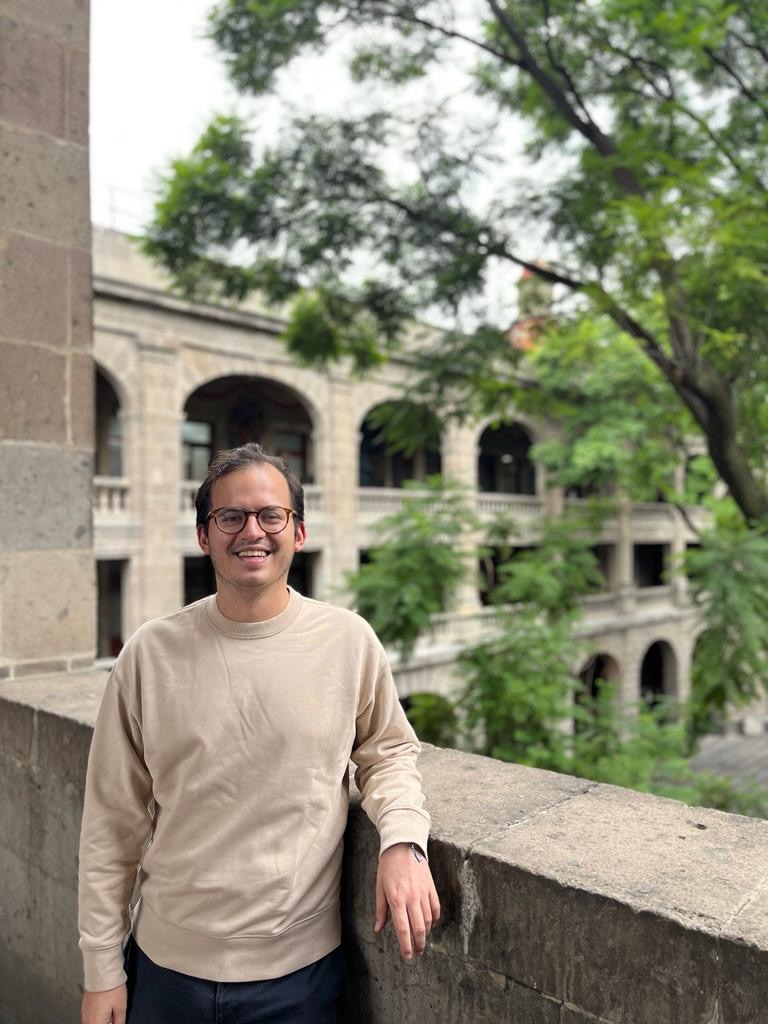
My name’s Marco, and I’m a master’s in city planning candidate at MIT. I’m passionate about planning solutions to climate challenges, and I came to MIT after a tech career, where I worked in partnerships and strategy. I’m interning at the Institute for Transportation & Development Policy in Mexico City this summer, working on decarbonizing transportation projects across Mexico and Latin America.
 MISTI Blogs